

Jade & Ivory Glutinous Rice Dumplings in Ginger Syrup (Chè Trôi Nước Lục Bạch)
Jade & Ivory Glutinous Rice Dumplings in Ginger Syrup, known in Vietnamese as Chè Trôi Nước Lục Bạch, brings warmth and comfort to the table. In Vietnam, cooks traditionally prepare these sweet glutinous rice dumplings for Lunar New Year and family gatherings. Their round shape symbolizes wholeness, unity, and sweet beginnings. Each spoonful brings together warm ginger syrup, rich coconut drizzle, and chewy dumplings stuffed with savoury-sweet mung bean filling.
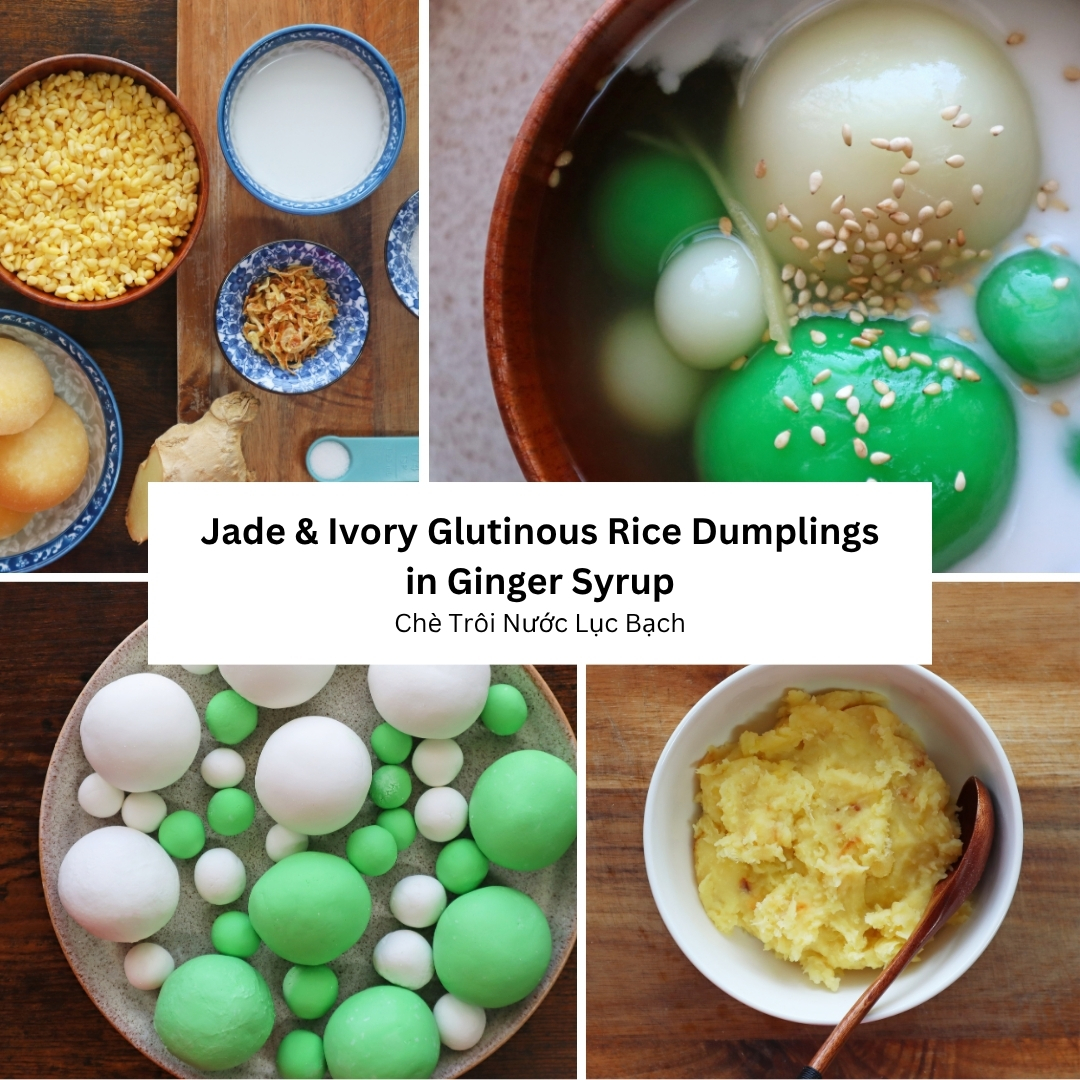
In this recipe, we tint half of the glutinous rice dough with aromatic pandan extract to create a beautiful jade-green hue. Cooked alongside classic ivory dumplings, the two colours create a stunning visual contrast in the serving bowl.
Texture plays a crucial role in great rice dumplings. To keep the dough soft and chewy rather than tough, we employ a simple cooked starter paste. This classic Asian technique hydrates the rice starches evenly. It produces pliable dough that seals easily around the filling and retains a melt-in-your-mouth tenderness once cooked.
Whether you serve this dish for a special celebration or an evening treat, it delights the senses. The aroma of crushed ginger warms the kitchen while coconut sauce adds a silky finish. Gather your ingredients, watch the step-by-step video, and enjoy crafting this timeless Vietnamese sweet at home!
Q&As on Jade & Ivory Glutinous Rice Dumplings in Ginger Syrup
1. Can I use another type of sugar instead of light palm sugar?
Yes. If light palm sugar is unavailable, you can use light brown sugar or yellow rock sugar in the ginger syrup. Both options dissolve easily and create a pleasantly sweet, fragrant syrup.
Light brown sugar will give the syrup a slightly deeper colour and a mild caramel flavour, while yellow rock sugar produces a cleaner, more delicate sweetness. You can substitute either one in the same amount as the light palm sugar. For the best flavour, choose a sugar that is not too dark or strongly molasses-flavoured, so the fresh ginger remains the main aroma.
2. What is palm sugar, and how is it different from white granulated sugar?
Palm sugar is made by collecting and cooking the sap of certain palm trees, such as coconut or palmyra palms. It is commonly sold in blocks, discs, granules, or small pieces, depending on the variety and producer.
Compared with white granulated sugar, palm sugar has a deeper golden-brown colour and a gentle caramel-like flavour. It adds more complexity to the ginger syrup while complementing the warmth of the fresh ginger. White sugar has a cleaner, more straightforward sweetness and lacks the same caramel notes.
Palm sugar is not necessarily healthier than white sugar, as both are still added sugars. Its main appeal in this recipe is its distinctive flavour and traditional use in Vietnamese desserts.
3. What is glutinous rice flour, and is it the same as regular rice flour?
Glutinous rice flour is made from sweet rice, also called sticky rice. Despite the name, it does not contain gluten. The word “glutinous” describes its naturally sticky, chewy texture when cooked.
Regular rice flour is made from ordinary white rice and produces a lighter, firmer, and less elastic texture. It is often used for rice noodles, cakes, and batters, while glutinous rice flour is ideal for chewy desserts such as chè trôi nước, mochi, and tang yuan.
For this recipe, glutinous rice flour is essential because it creates the soft, stretchy dough needed to wrap the mung bean filling. Regular rice flour is not a direct substitute, as it will produce dumplings that are firmer and more likely to crack or break during shaping and cooking.
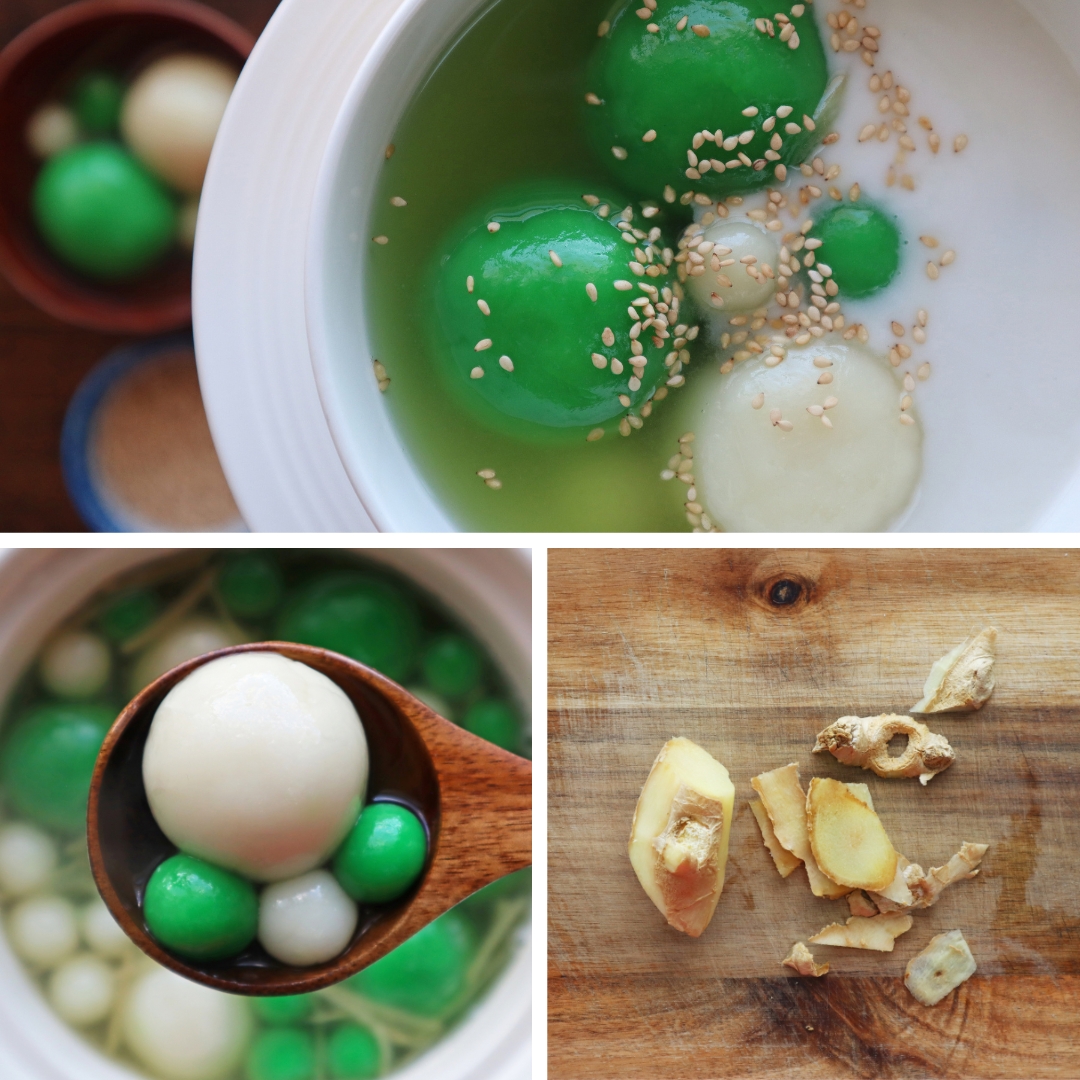
4. Why does the ginger syrup have a light green tint?
The light green tint comes from the pandan extract in the green dumplings. As the dumplings simmer in the ginger syrup, a small amount of pandan colour naturally leaches into the liquid.
This is completely normal and does not affect the flavour or quality of the dessert. In fact, the soft green tint adds to the elegant jade-and-ivory appearance. The colour may vary depending on the type and amount of pandan extract used.
5. What does “Lục Bạch” mean?
“Lục Bạch” means “green and white.” In Vietnamese, lục refers to green, while bạch means white.
In this dessert’s name, Chè Trôi Nước Lục Bạch describes the beautiful contrast between the jade-green pandan dumplings and the classic ivory-white dumplings. It gives the dish an elegant name that reflects its two-colour presentation.
Love This Recipe? Discover More Vietnamese Chè
If you enjoyed these chewy dumplings in warm ginger syrup, explore our collection of classic Vietnamese chè recipes. From creamy coconut puddings and sweet bean soups to colourful layered jellies and sticky rice treats, there is always a delightful bowl waiting for you.
Browse our easy Vietnamese dessert recipes to find your next favourite sweet soup!
- Vietnamese Three-Colour Dessert (Chè Ba Màu)
- Vietnamese Fruit Cocktail (Chè Thái)
- Chè Thưng (Mung Bean & Coconut Medley Soup)
Recipe for Jade & Ivory Glutinous Rice Dumplings in Ginger Syrup (Chè Trôi Nước Lục Bạch)
Equipment
- 1 small saucepan
- 1 medium pot
Ingredients
Filling:
- 75 grams dried split mung beans soaked in water overnight or for at least 4 hours
- 35 grams coconut cream
- 1 tablespoon crispy fried shallots
- 1 tablespoon sugar
- A pinch of salt
Ginger Syrup:
- 200 grams light palm sugar
- 35 grams fresh ginger
- 1 litre water
Dough:
- 10 grams glutinous rice flour
- 220 grams water
- 240 grams glutinous rice flour
- ½-1 teaspoon pandan extract
Coconut Sauce:
- 300 grams coconut cream
- 1 tablespoon sugar
- 5 grams tapioca starch
- A pinch of salt
Garnish:
- 2 tablespoons toasted white sesame seeds
Instructions
- Prepare the Golden Ginger Syrup & Coconut Sauce:Peel the ginger and slice it into thin, elegant matchsticks. In a medium pot, combine 1 litre of water, 200 grams light palm sugar, and the sliced ginger matchsticks. Bring to a gentle boil over medium heat until the sugar dissolves completely into a clear, golden amber syrup. Remove from the heat, cover, and let steep.In a small saucepan, combine 300 grams coconut cream, 1 tablespoon sugar, and a pinch of salt. Whisk the tapioca starch slurry into the mixture. Heat over medium-low heat, stirring constantly, until the sauce thickens and just begins to bubble gently. Remove from the heat, cover, and set aside.
- Prepare the Savoury-Sweet Mung Bean Filling:Rinse the soaked mung beans thoroughly until the water runs clear. Transfer the beans to a saucepan and add enough water to cover about 1.5 cm (0.5 inch) above the beans.Bring to a boil over medium-high heat, skimming off any foam that rises to the surface. Reduce the heat to low, cover partially, and simmer until the beans are completely tender and the water has mostly evaporated (stir occasionally to prevent catching at the bottom).Stir in 35 grams coconut cream, 1 tablespoon sugar, and a pinch of salt. Mash the warm beans until smooth using a spatula or potato masher. Mix in 1 tablespoon crispy fried shallots until evenly distributed.Allow the filling to cool slightly, then lightly oil your hands and divide the mixture into 10 equal portions (about 20-22 grams each). Roll each portion into a smooth, compact ball. Cover with plastic wrap and refrigerate until assembly.
- Prepare the Two-Tone Dough (White & Pandan):In a small saucepan, whisk 10 grams glutinous rice flour with 220 grams water until smooth with no lumps. Cook over medium heat, stirring continuously, until the mixture thickens into a glossy, translucent paste. Remove immediately from the heat.Place the remaining 240 grams glutinous rice flour into a large mixing bowl. While the paste is still hot, pour it into the flour. Mix with a spatula until the liquid is incorporated, then knead by hand once comfortable to touch for 10–12 minutes until you achieve a smooth, soft, and non-sticky dough.Split the kneaded dough into two equal halves. Keep one half plain white and cover it. For the second half, knead in ½-1 teaspoon pandan extract until the vibrant green colour is uniform and streak-free. Cover both dough portions and let rest for 30–45 minutes to relax the starches.
- Assemble the Dumplings:Divide both the white dough and the green pandan dough into 5 equal portions each (roughly 30-35 grams per piece), giving you 10 dough balls total. Any leftover small scraps can be rolled into bite-sized mini plain pearls.Take one portion of dough, roll it into a smooth ball, and flatten it into a round disc, keeping the edges slightly thinner than the centre.Place a mung bean ball in the centre, wrap the dough snugly around the filling to remove air pockets, and pinch the seam tightly closed. Gently roll the dumpling between your palms until perfectly round and smooth (dab with a tiny drop of water to smooth out any surface creases). Repeat with all white and green portions.
- Cook & Serve:Add a small amount of sugar to a pot of water and bring it to a rolling boil. Gently place the dumplings into the boiling water to blanch and set the outer dough layer for about 1 minute.Carefully transfer the blanched dumplings using a slotted spoon directly into the pot of simmering golden ginger syrup.Simmer over gentle heat for 10-12 minutes. The dumplings will sink initially and then gracefully float to the surface once cooked through, tender, and infused with ginger aroma.To serve, ladle 1 green pandan dumpling and 1 white dumpling into a dessert bowl along with warm ginger syrup and a few mini pearls. Drizzle generously with silky coconut sauce and finish with a sprinkle of toasted sesame seeds.