

Vietnamese Pumpkin and Pork Rib Soup (Canh Bí Đỏ Hầm Sườn)
In Western kitchens, pumpkin soup is almost synonymous with smooth, blended bisques enriched with butter or cream. In Vietnamese home cooking, however, pumpkin takes on a completely different personality. Soups like Vietnamese Pumpkin and Pork Rib Soup, or Canh Bí Đỏ Hầm Sườn, keep the ingredients in whole, tender pieces rather than pureeing them. This allows you to savour the velvety, melt-in-your-mouth squash alongside juicy pork ribs, while enjoying a light, clean broth that gently cleanses the palate.
Simmered gently with halved onion, tender spare ribs release their rich juices into the pot. Chunks of sweet pumpkin or kabocha squash cook until perfectly soft, keeping their shape without turning to mush. A pinch of rock sugar and salt balances the broth, highlighting the natural sweetness of both meat and squash.
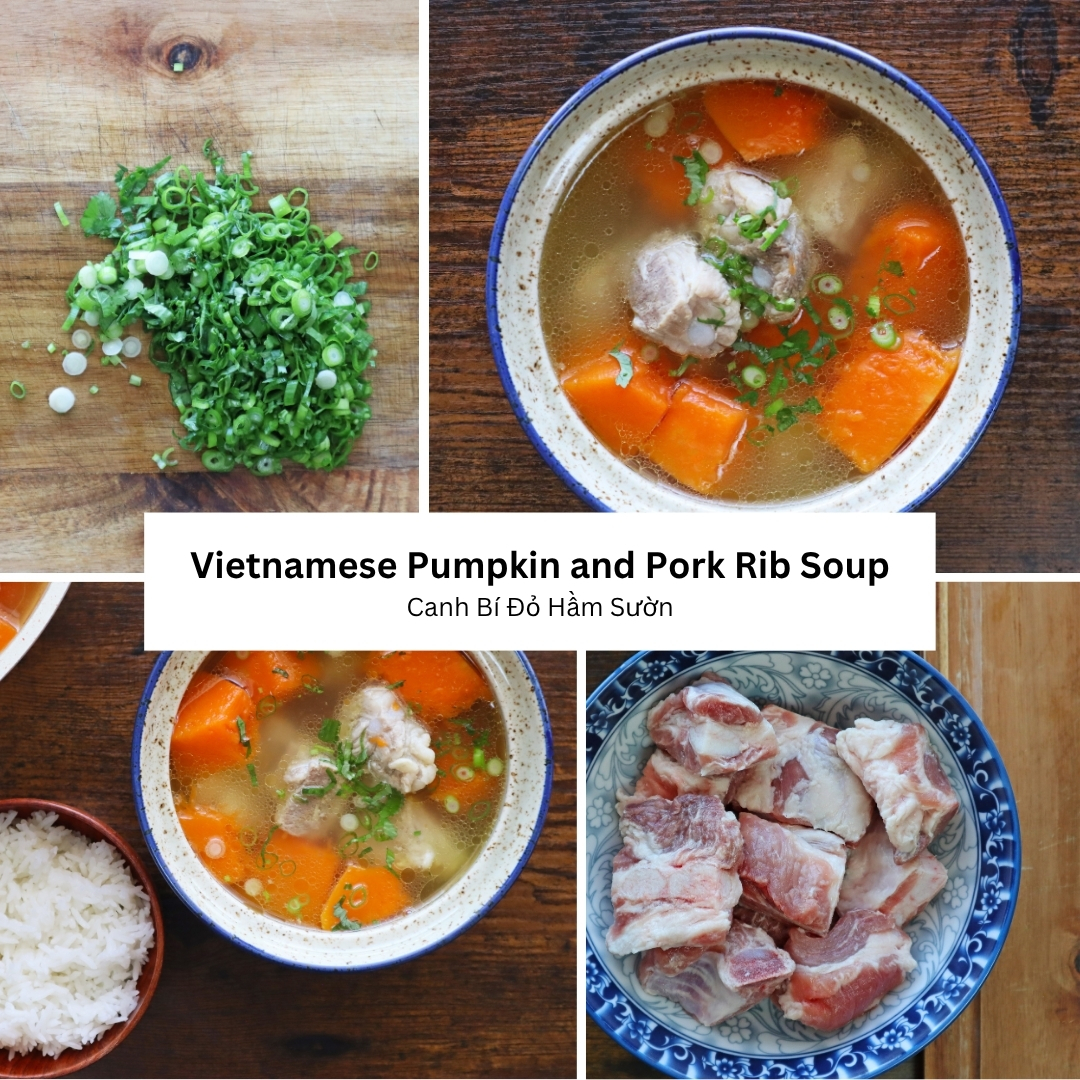
Served piping hot with a shower of fresh green onions and cilantro, this soothing soup is designed to accompany a warm bowl of jasmine rice as part of a family meal. It is a wholesome, nourishing dish that brings instant comfort to the dining table.
Q&As on Vietnamese Pumpkin and Pork Rib Soup
1. Are kabocha squash and pumpkin the same thing, and which is better for this soup?
Kabocha and pumpkin are closely related, but they are not entirely identical! Kabocha is a variety of Japanese winter squash with dark green skin and dense, vibrant orange flesh. When cooked, it offers a sweet flavour and a velvety, chestnut-like texture that holds its shape nicely in hot broth. Traditional North American field pumpkins, on the other hand, tend to be stringier and carry more water.
For Canh Bí Đỏ Hầm Sườn, kabocha is often the top choice because the chunks soften beautifully without turning to mush too quickly. If you cannot find kabocha, other firm winter squashes like buttercup or sugar pie pumpkin make lovely substitutes. Using either name for the soup works wonderfully, so feel free to choose whichever squash is fresh and convenient for you!
2. Why don’t you blanch the pork ribs before cooking?
In my experience cooking with different types of pork bones and cuts, spare ribs with a good mix of bone, meat, fat, and cartilage don’t need to be blanched beforehand. They usually release only a small amount of foam and impurities as they come to a boil. As you’ll see in the video, you can simply skim this from the surface at the beginning of cooking. The broth still turns out clear and flavourful, without the extra step of blanching the ribs.
3. Besides pork spare ribs, what else can you use to make Canh Bí Đỏ?
Pork spare ribs or pork bones are the most popular choices because they give the broth a rich, savoury flavour. But this comforting pumpkin soup can be made in several other ways, depending on what you have on hand or what you feel like eating.
Minced pork is another popular option, and it takes less time to cook than ribs or bones. You can also make the soup with fresh or dried shrimp, which add a lovely savoury seafood flavour. For a vegetarian version, use mung beans or peanuts instead of pork. These variations each bring a different flavour and texture to the soup, while letting the sweetness of the pumpkin shine through.
4. Do I need to peel the pumpkin or kabocha squash before adding it to the soup?
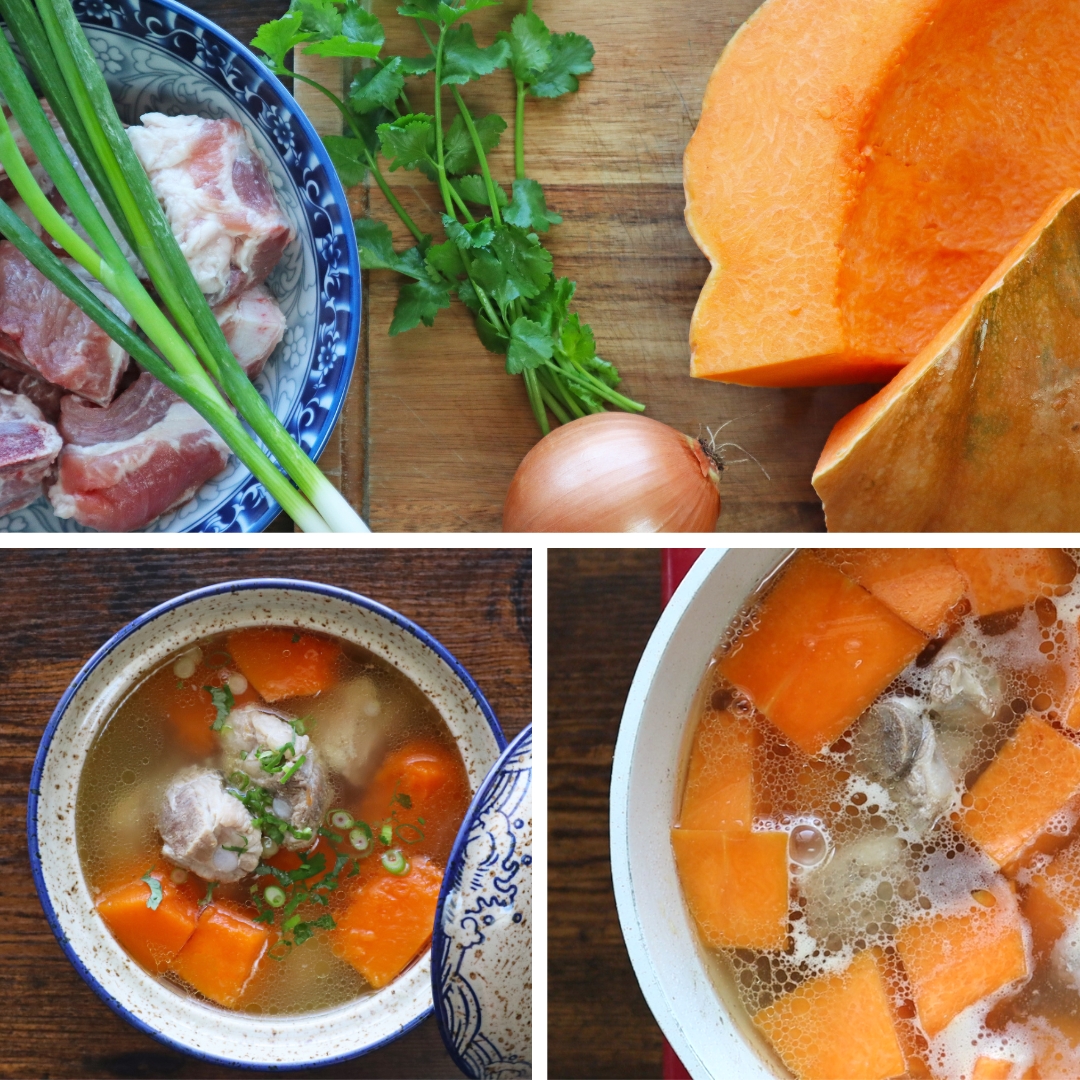
You can choose either approach, and both methods work nicely depending on the texture you enjoy most. In this recipe, I choose to peel the squash because it allows each bite-sized piece to turn wonderfully soft and velvety in the broth. If you are using kabocha squash, the dark green skin is completely edible and tender once cooked. Leaving the peel intact also helps the pieces hold their shape even better, which can be helpful if you plan on reheating the soup later. Should you decide to keep the skin on, simply scrub the outside thoroughly under cool running water before slicing, and cut the squash into evenly sized chunks so every piece cooks at the same pace.
5. How can I prevent the pumpkin from becoming mushy and clouding the broth?
The secret to keeping the pumpkin intact lies in timing your cooking steps and maintaining a gentle heat. Always simmer the pork ribs on their own first until they are tender before introducing the squash to the pot, as pumpkin cooks much faster than bone-in meat. Once you add the pumpkin chunks, keep the heat on low so the soup stays at a quiet simmer rather than a rapid, rolling boil, which can easily break down the tender edges. Different varieties of pumpkin and squash absorb liquid and soften at slightly different speeds, so begin checking the pieces with the tip of a knife or a chopstick around the eight-minute mark. As soon as the squash feels tender while still holding its neat bite-sized shape, remove the pot from the heat immediately to avoid overcooking.
Explore More Comfort Soups
If you enjoyed this warm bowl of Canh Bí Đỏ Hầm Sườn, there are many other comforting Vietnamese and Asian soups to discover. Try a nourishing lotus root soup with pork bones, a delicate winter melon soup, or a simple vegetable canh to round out a family meal.
Each soup brings its own lovely combination of broth, vegetables, and savoury ingredients to the table. Serve them with steamed rice, share them with family, and find a new favourite to enjoy on a cozy day.
- Pork Bone, Winter Melon, and Dried Scallop Soup
- Pork Bone and Daikon Radish Soup
- Vietnamese Sweet and Sour Soup with Shrimp (Canh Chua Tôm)
Recipe for Vietnamese Pumpkin and Pork Rib Soup (Canh Bí Đỏ Hầm Sườn)
Equipment
- 1 large soup pot
Ingredients
- 650 grams pork spare ribs
- 750 grams pumpkin or kabocha squash
- 1 small onion
- 2 green onions
- A small bunch cilantro
Seasoning (to taste):
- Salt, mushroom powder, rock sugar, fish sauce
Instructions
- Prep the vegetables and herbs: Peel the pumpkin or kabocha squash, remove the seeds, and cut it into bite-sized chunks. Finely chop the green onions and cilantro for the garnish, then set them aside.
- Start the broth: Place the bite-sized pork spare ribs and halved onion into a large soup pot. Pour in 1.5 litres of fresh water and bring the pot to a boil over medium-high heat.
- Skim and simmer: Skim off any foam and impurities that rise to the surface so the broth stays clear. Lower the heat to a gentle simmer, partially cover the pot with the lid, and cook for about 45 minutes until the ribs are tender.
- Add the pumpkin: Remove and discard the onion halves from the pot. Carefully add the pumpkin chunks to the broth and let them simmer for a few minutes.
- Season gently: Taste the broth first, then season with a few small crystals of rock sugar and a light pinch of salt and mushroom powder, adjusting to your liking. The slow-simmered ribs and pumpkin already provide natural sweetness, so keep the seasoning minimal.
- Finish cooking: Continue to simmer gently for about 10 more minutes, or until the pumpkin is fork-tender while still holding its shape nicely. Turn off the heat.
- Garnish and serve: Ladle the hot soup, tender ribs, and pumpkin into a serving bowl. Scatter the chopped green onions and cilantro on top, and serve warm alongside a bowl of steamed jasmine rice.