

Luxurious Japanese Beef Curry with Asian-Market “Cow Flank”
This Japanese Beef Curry is rich, silky, and deeply comforting – made with tender braised beef, chunky carrots and potatoes, and a thick, savoury Japanese curry roux sauce. For this recipe, I used the well-marbled cut often labelled “cow flank” or “flank beef” at Asian supermarkets. In Vietnamese cooking, this is similar to the beef commonly used for bò kho: it has layers of meat, fat, and collagen-rich connective tissue that become wonderfully tender after a long, gentle braise.
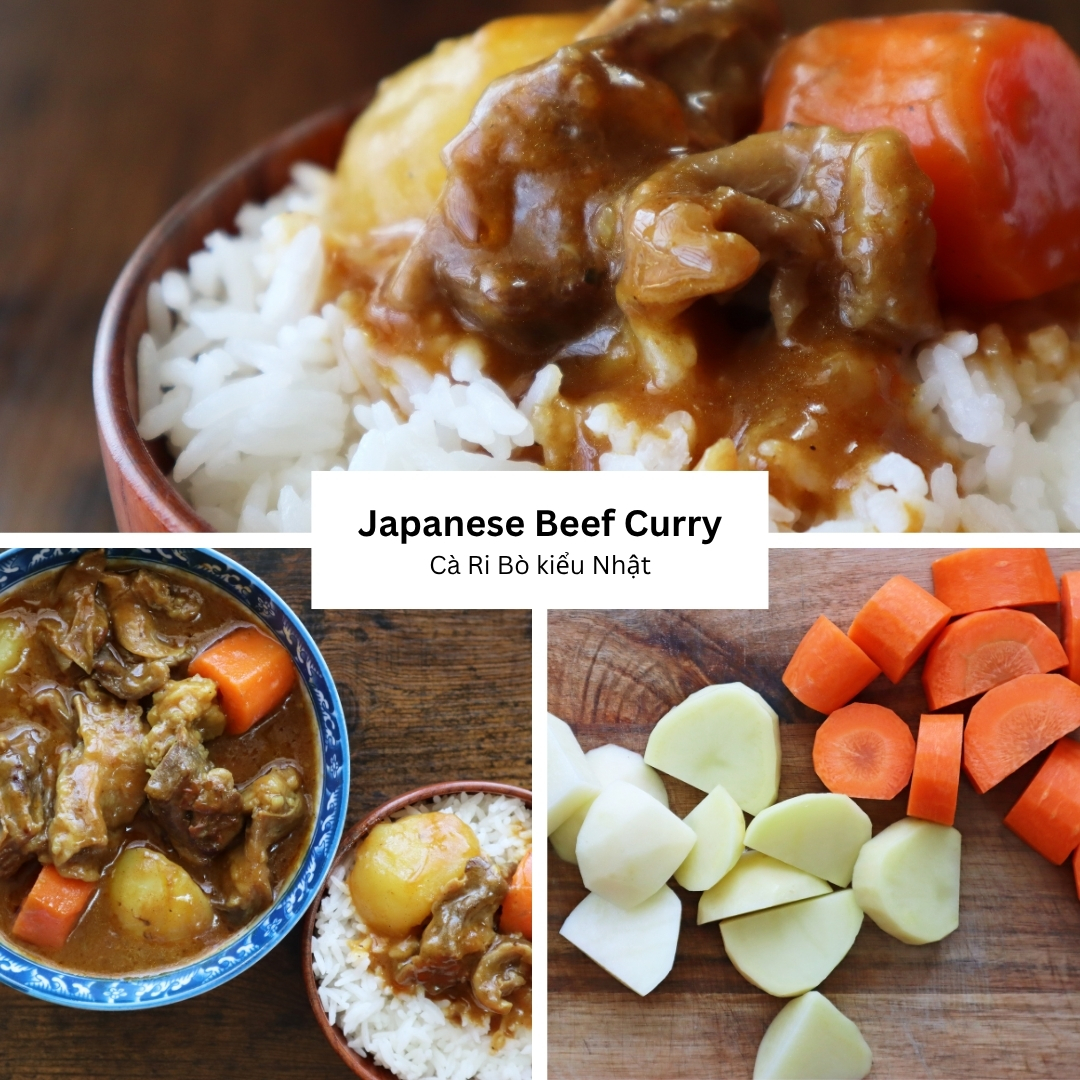
Despite its Asian-market label, this cut is quite different from standard Western flank steak, which tends to be leaner and is better suited to quick cooking. If you cannot find Asian-market cow flank, use beef chuck, blade roast, well-marbled stewing beef, or brisket instead.
The result is a hearty, stew-like curry with melt-in-your-mouth beef and a glossy sauce that is perfect spooned over hot steamed rice.
Why You’ll Love This Recipe
- Uses a rich, slow-braising beef cut for exceptional flavour and tenderness
- Features a smooth, thick Japanese curry roux sauce
- Includes familiar, comforting vegetables: potatoes, carrots, and onions
- Easy to make ahead – the flavour becomes even better the next day
- A delicious fusion of Japanese curry comfort food and Vietnamese-style braising beef
Q&As on Japanese Beef Curry
1. How did curry become a national dish in Japan?
Curry became a national dish in Japan through a long process of adaptation, convenience, and everyday familiarity. It arrived in the late nineteenth century during the Meiji era, mainly through British influence rather than directly from India. The British version was already a thick, mild, stew-like curry made with curry powder, meat, and vegetables – an approach that was easy for Japan to adapt. Japanese cooks paired it with rice and developed the signature thick sauce using a flour-and-fat roux, creating karē raisu, or Japanese curry rice.
Its popularity grew because curry was filling, easy to prepare in large quantities, and well suited to military and school meals. As Japanese-made curry powder and later ready-to-use curry roux blocks became widely available, home cooks could make a satisfying family meal with beef, chicken, pork, potatoes, carrots, and onions. Over generations, it became a familiar weeknight favourite and a beloved comfort food across Japan. Today, Japanese curry is enjoyed in homes, restaurants, schools, and naval kitchens, in forms such as curry rice, katsu curry, curry udon, and curry bread.
2. How is Japanese curry different from other global varieties like Indian or Thai curry?
While the word “curry” represents a massive spectrum of flavours, Japanese curry stands in a category of its own due to its unique texture and flavour profile. Unlike Thai curries, which often rely on a base of fresh herbs, chilies, and coconut milk, or Indian curries that focus on a complex layering of dry-toasted spices and a tomato or yogurt base, Japanese curry is essentially a “fusion” dish. It utilizes a French-style roux – a mixture of flour and fat – to create a sauce that is much thicker, glossier, and more gravy-like than almost any other version.
In terms of flavour, Japanese curry is generally milder and leans into a distinctive “sweet and savoury” balance. Instead of the sharp heat of fresh chilies, it relies on a warm, earthy spice blend and is often rounded out with ingredients like grated apples, honey, ketchup, or mirin. Furthermore, the ingredients in a Japanese curry are very specific: while you might find a huge variety of vegetables in other cultures, a classic Japanese curry almost always features the “Big Three” – onions, carrots, and potatoes – simmered with meat until the vegetables are incredibly soft and the beef is fork-tender.
3. Why does “Flank Beef” look so different in Asian supermarkets compared to Western ones?
The confusion exists because Western and Asian butchery styles prioritize different cooking methods. In a standard Western supermarket, “Flank Steak” refers to a specific, singular muscle from the lower belly that is very lean and meaty. It is designed to be grilled quickly and sliced thin. However, in many Asian markets – especially those serving Vietnamese or Chinese communities – the term “Flank” (or Nạm) is used more broadly to describe the entire “plate” area of the cow.
This region includes the navel and lower brisket, which are much fattier and layered with the “chewy” connective tissue (collagen). While a Western butcher treats these fatty layers as “trim” or separates them for brisket, Asian butchers keep them together specifically for slow-braised dishes like Bò Kho. Because the muscle is physically located in the “flank” area of the animal’s belly, the label “Flank Beef” is often used, even though the texture and fat content are the complete opposite of a lean Western flank steak. This is why “Asian-market Flank” is the secret to a rich, silky curry sauce that you just can’t get from the lean Western version!
4. Is Japanese Beef Curry a good dish to make ahead of time or eat as leftovers?
Not only is this curry great the next day, but many fans actually argue that it tastes even better after a night in the refrigerator! This is because Japanese curry is a slow-simmered stew; as it sits, the various aromatics, spices, and seasonings have more time to fully meld together. Perhaps more importantly, the collagen-rich “cow flank” or brisket we used continues to release its natural gelatin into the sauce, making it even richer and more velvety when reheated.
When you’re ready for leftovers, simply heat the curry gently on the stove or in the microwave. Because the roux-based sauce naturally thickens as it cools, you might find it helps to stir in a small splash of water or beef stock during the reheating process to restore that perfect, glossy consistency. It’s the ultimate “planned over” meal that makes for a quick and incredibly satisfying lunch or dinner the following day.
5. Can I cook the vegetables at the same time as the “cow flank” beef to save time?
While it might be tempting to throw everything into the pot at once, it is highly recommended to wait before adding your vegetables. The specific cut of beef we are using – whether you call it Asian-market flank, nạm gân, or brisket – is a “braising” cut. This means it is full of tough muscle fibres and connective tissue that require a long, slow simmer (usually 60 to 90 minutes) to break down and become “fork-tender.”
If you were to add your carrots and potatoes at the very beginning with the beef, they would completely disintegrate into a mushy pulp long before the meat is ready to eat. By waiting until the beef is nearly tender before adding the vegetables, you ensure the carrots and potatoes are perfectly cooked – soft enough to melt in your mouth, but still firm enough to hold their shape for a beautiful presentation. It is all about timing to get that perfect balance of textures!
Japanese Beef Curry
Equipment
- 1 large pot
Ingredients
Proteins & Vegetables:
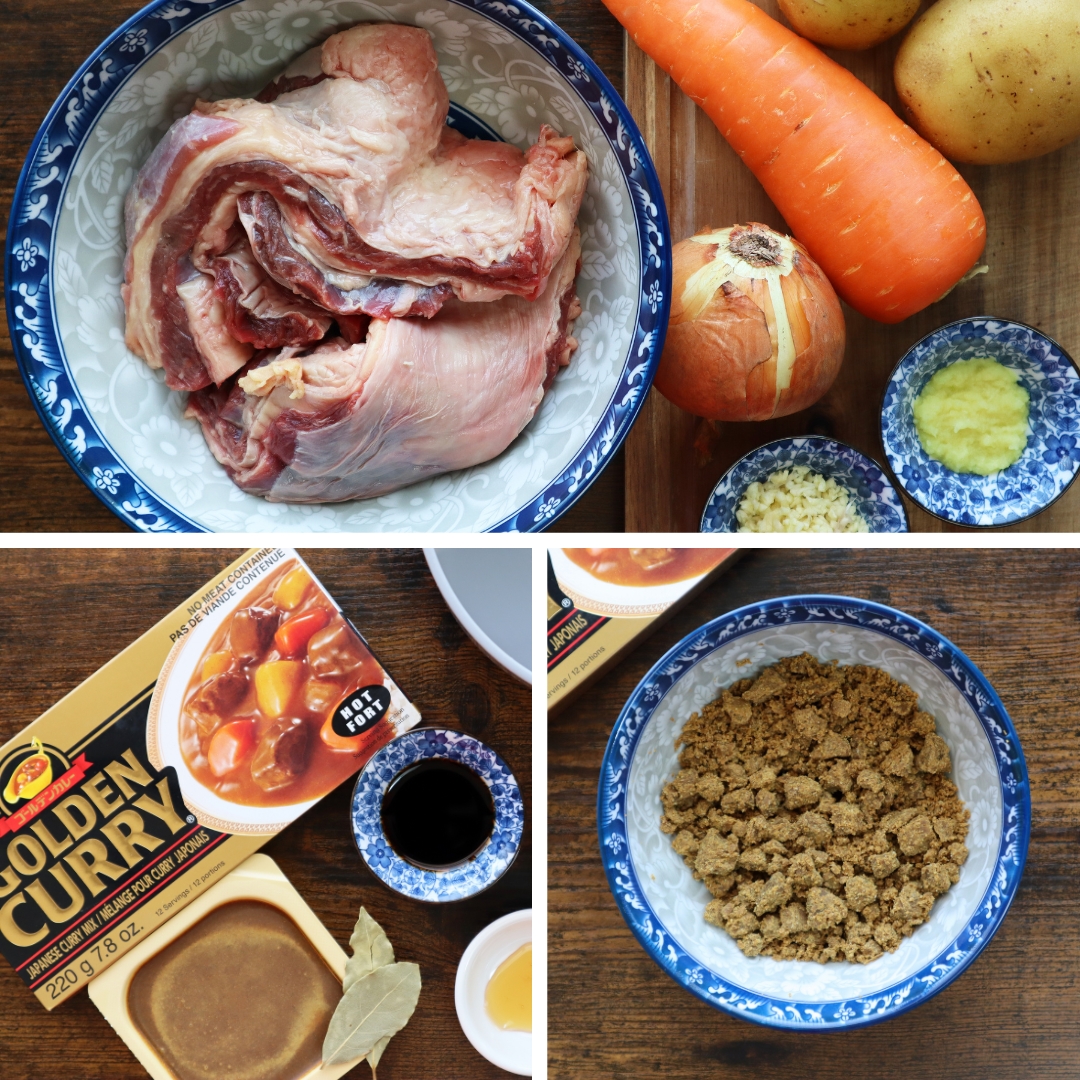
- 625 grams well-marbled braising beef
- 1 large onion
- 1 large carrot
- 2-3 medium Yukon gold potatoes
- ½ tablespoon freshly grated ginger
- 1 tablespoon freshly minced garlic
Seasoning:
- Salt, mushroom powder and pepper (to taste)
Curry Base and Liquids:
- 110 grams Japanese curry roux
- 1 litre water
- 1 tablespoon soy sauce
- 1 tablespoon ketchup
- 1 tablespoon Aji-Mirin
- ½ teaspoon honey optional
- 2 bay leaves optional
Instructions
- Prepare the Ingredients:Cut the beef into large, generous chunks. Place it in a mixing bowl and season with mushroom powder, salt, and ground black pepper. Mix well to coat evenly, then let the beef marinate for about 5 minutes while you prepare the vegetables.Cut the carrots and potatoes into thick, chunky pieces. Thinly slice the onion, mince the garlic, and grate the ginger. Break the Japanese curry roux into smaller pieces so it will dissolve more quickly and evenly later.
- Cook:Heat a generous drizzle of oil in a large pot over medium-high heat. Add the beef chunks and sear until browned on all sides. Remove the beef from the pot and set aside.Reduce the heat to medium. Add the sliced onion to the same pot and sauté until soft and translucent, scraping up the flavourful browned bits from the bottom of the pot. Add the garlic and ginger, then cook for about 1 minute, until fragrant.Return the seared beef to the pot. Pour in 1 litre of water and add the bay leaves. Bring to a boil, then reduce the heat to low. Cover and simmer gently for 1 to 1½ hours, or until the beef is fork-tender. For an even softer, more fall-apart texture, braise it for the full 1½ hours.Add the carrots and potatoes to the pot. Simmer for about 20 minutes, or until the vegetables are tender and cooked through.Turn the heat down to its lowest setting. Add the pre-broken curry roux gradually, stirring continuously until it has completely dissolved and the sauce becomes thick and glossy.Stir in the soy sauce, ketchup, Aji-Mirin, and honey. Simmer uncovered for 5 minutes, stirring occasionally, to allow the flavours to come together.
- Serve:Ladle the Japanese Beef Curry into serving bowls and enjoy hot with steamed rice.