

Hong Kong Egg Tarts
Hong Kong egg tarts are a true bakery classic. With their flaky crusts and silky custard centres, these pastries are a staple at dim sum tables and cha chaan tengs (Hong Kong-style cafés).
Making traditional pastry from scratch can take hours of laminating butter and dough. Fortunately, you can achieve that crisp, multi-layered bite at home by using convenient store-bought puff pastry. Paired with a delicate, glossy custard filling, this recipe brings the beloved taste of Cantonese bakeries right into your own kitchen.
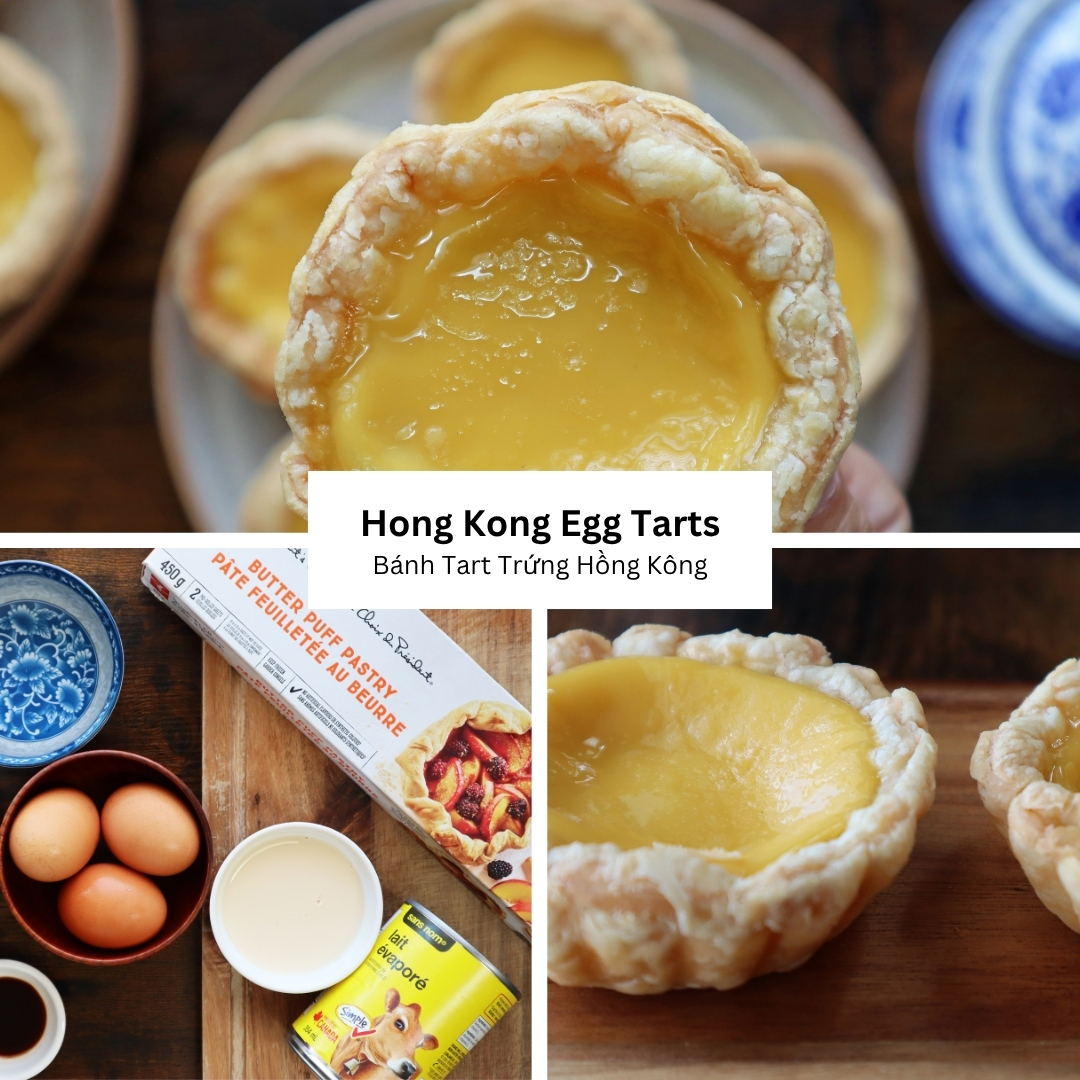
The Fascinating History of Hong Kong Egg Tarts
The story of the Hong Kong egg tart is a delicious example of East-meets-West culinary fusion.
The treat originally evolved in Guangzhou (Canton) during the 1920s. At the time, department store chefs competed fiercely to attract customers by creating weekly “Western-style” culinary specials. Inspired by European custard pastries like British custard tarts and Portuguese pastéis de nata, local chefs adapted the concept using traditional Chinese lard-based flaky pastry and a steamed egg pudding filling.
During the mid-20th century, many Cantonese pastry chefs moved to Hong Kong, bringing the recipe with them. The dessert quickly became a fixture in local tea restaurants and bakeries. Today, you will find two distinct versions across the city: those with a crumbly shortcrust pastry (cookie crust), and those with a delicate, multi-layered laminated dough (puff pastry). This recipe focuses on the puff pastry variety, offering maximum flakiness with minimal fuss.
Why You Will Love This Recipe
- Quick and Accessible: Store-bought puff pastry saves significant prep time without sacrificing texture.
- Silky Smooth Custard: Straining the mixture ensures a glossy, blemish-free surface with no air pockets.
- Balanced Sweetness: Evaporated milk and simple sugar syrup create a light filling that is rich without feeling heavy.
- Foolproof Baking Technique: A two-stage oven temperature guarantees a thoroughly crisped base while keeping the custard tender and gently set.
Q&As on Hong Kong Egg Tarts
1. What is the difference between Hong Kong Egg Tarts and Portuguese Egg Tarts?
Hong Kong egg tarts have a smooth, lightly sweetened custard with a delicate egg flavour. They are usually made with puff pastry or a crumbly shortcrust base, and the custard has a flat, glossy surface. Portuguese egg tarts, also called pastéis de nata, feature flaky laminated pastry and a richer custard made with milk, egg yolks, and sugar. They are baked at a higher temperature, creating distinctive caramelized spots on top. Hong Kong egg tarts are typically softer and more subtle, while Portuguese egg tarts have a richer flavour and toasted, caramelized finish.
2. Why do some Hong Kong Egg Tart recipes use two whole eggs and one egg yolk?
Some recipes use two whole eggs plus one egg yolk to create a richer custard with a deeper yellow colour. The additional yolk adds more fat, which gives the filling a creamier texture and a fuller flavour. It can also make the custard look more golden, especially when using eggs with pale yolks.
This recipe uses three whole eggs for a lighter, more delicate custard with a clean egg flavour. Whole eggs also provide enough egg white to help the custard set properly while keeping the filling soft and silky. Both methods work well, so the choice depends on your preferred colour, richness, and texture.
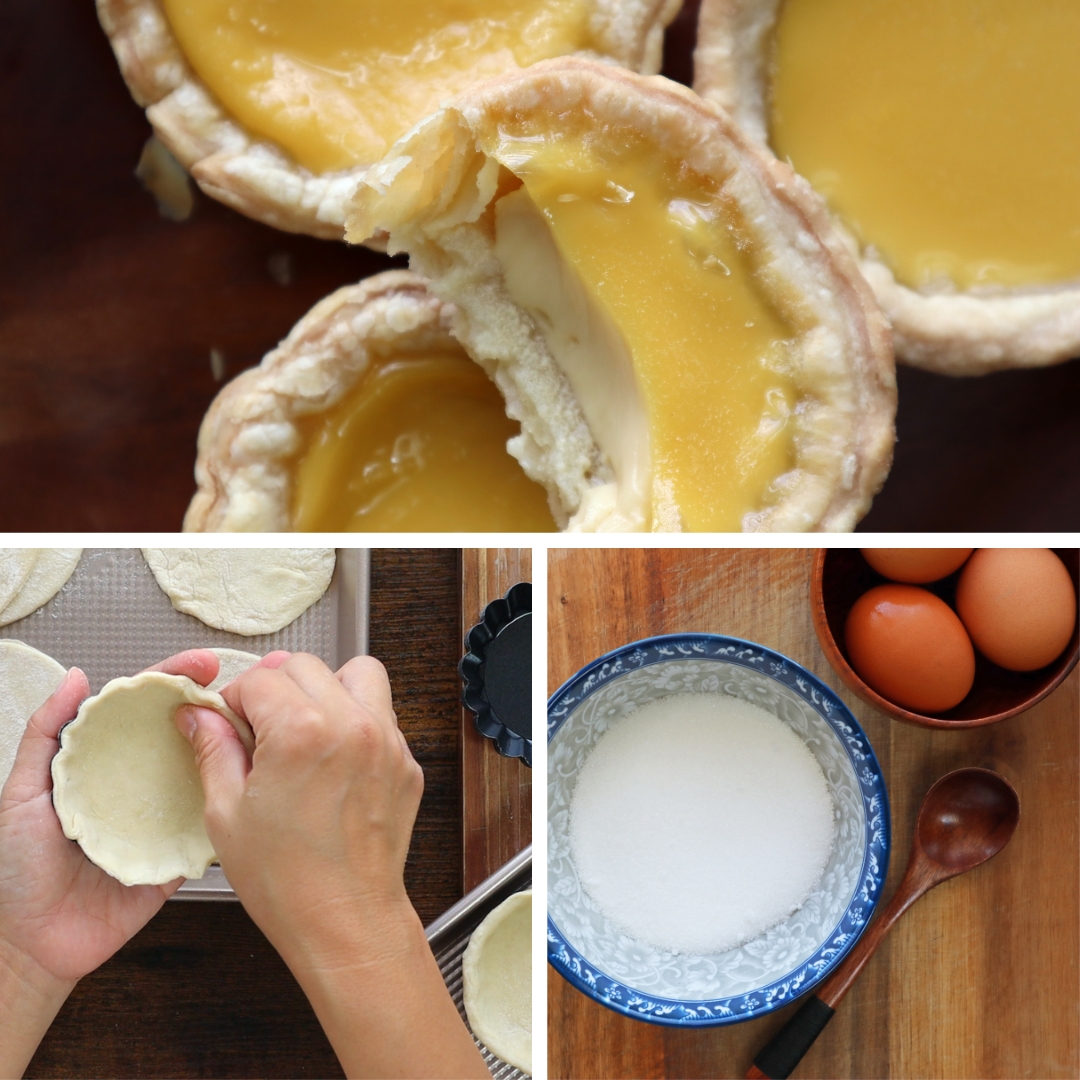
3. Why should eggs be at room temperature for baking?
Room-temperature eggs blend more easily with the other ingredients, creating a smoother and more uniform mixture. They also combine better with sugar, milk, and melted fats, which helps produce a consistent texture. In custard recipes, room-temperature eggs help the mixture heat evenly in the oven. This can reduce the risk of uneven setting or overcooked patches. For the best results, take the eggs out of the refrigerator about 30 minutes before baking. If you are short on time, place them in a bowl of warm water for a few minutes.
4. Why are Hong Kong Egg Tarts baked at two different temperatures?
The tarts are baked at two temperatures to help both the pastry and custard cook properly. The higher initial temperature encourages the puff pastry to rise, become flaky, and develop a golden colour. Lowering the temperature afterwards allows the custard to set more gently without becoming overcooked or rubbery. The tarts are ready when the pastry is golden and the custard has a slight jiggle in the centre. After baking, letting them rest briefly helps the custard finish setting while keeping its delicate texture.
5. How should leftover egg tarts be stored and reheated?
Let leftover egg tarts cool completely before storing them in an airtight container in the refrigerator for up to three days. For the best texture, reheat them in an oven or air fryer at 300°F (150°C) for five to eight minutes until the pastry is crisp and the custard is gently warmed through. Avoid using the microwave, as it makes the flaky puff pastry soft and soggy. You can also enjoy leftover tarts chilled straight from the fridge for a firmer, refreshing custard treat.
Explore More Asian & Vietnamese Desserts
If you enjoyed these Hong Kong egg tarts, you will love exploring more Asian and Vietnamese desserts! These sweet treats offer a wonderful variety of textures and flavours, from creamy custards and chewy cakes to fragrant coconut, tropical fruit, and refreshing beans.
I have shared a few of my favourite dessert recipes that you might enjoy just as much. Whether you are looking for a comforting homemade treat or a refreshing dessert with unique Asian flavours, be sure to check out these recipes:
- Vietnamese Crème Caramel (Bánh Flan)
- Vietnamese Fruit Cocktail (Chè Thái)
- Vietnamese Three-Colour Dessert (Chè Ba Màu)
Recipe for Hong Kong Egg Tarts
Equipment
- 1 oven
Ingredients
Custard Filling:
- 3 large eggs room temperature
- ½ cup evaporated milk room temperature
- ½ cup granulated sugar
- 1 cup hot water
- 1 teaspoon vanilla extract
Pastry Shells:
- 1 package store-bought puff pastry thawed
- A little all-purpose flour for dusting
Instructions
- Prepare the Ingredients:Dissolve the granulated sugar completely in the hot water. Let the mixture cool down to room temperature so it does not cook the eggs later.In a bowl, whisk the large eggs and vanilla extract together. Slowly pour in the cooled sugar syrup and the evaporated milk, whisking gently to combine.Strain the custard through a fine-mesh sieve two or three times to remove any bubbles and unmixed egg bits for a smooth texture.Roll out your puff pastry on a lightly floured surface. Cut out round circles using a round cutter or bowl. Press the pastry rounds into greased aluminum egg tart tins or a muffin pan, leaving a small lip of pastry over the edge to prevent shrinking.Prick the bottoms of the pastry shells 3 to 4 times with a fork. This "docking" allows trapped steam to escape so the bottom does not balloon up.Fill the shells about 90% full with the strained custard.
- Bake:Preheat your oven to 375°F (190°C). Bake for 10 minutes at this temperature, then lower it to 350°F (175°C) for another 15 minutes until the pastry is golden and the custard is just set with a slight jiggle. Turn off the heat, let the tarts sit for about 5 minutes for removing them from the oven.
- Serve:Allow the tarts to cool slightly in their molds before removing them. Enjoy them warm.