

Lychee & Strawberry Sago with Coconut Jelly
When warm weather rolls around, nothing hits the spot quite like a chilled fruit dessert. This Lychee & Strawberry Sago with Coconut Jelly (Chè Vải Dâu Tây Thạch Dừa) is a delightful treat that looks as lovely as it tastes. Tender mini tapioca pearls, juicy canned lychees, tart strawberries, and chewy coconut jellies float in a luscious, fragrant coconut milk soup. Every spoonful gives you a wonderful balance of creaminess, floral sweetness, and satisfying chew.
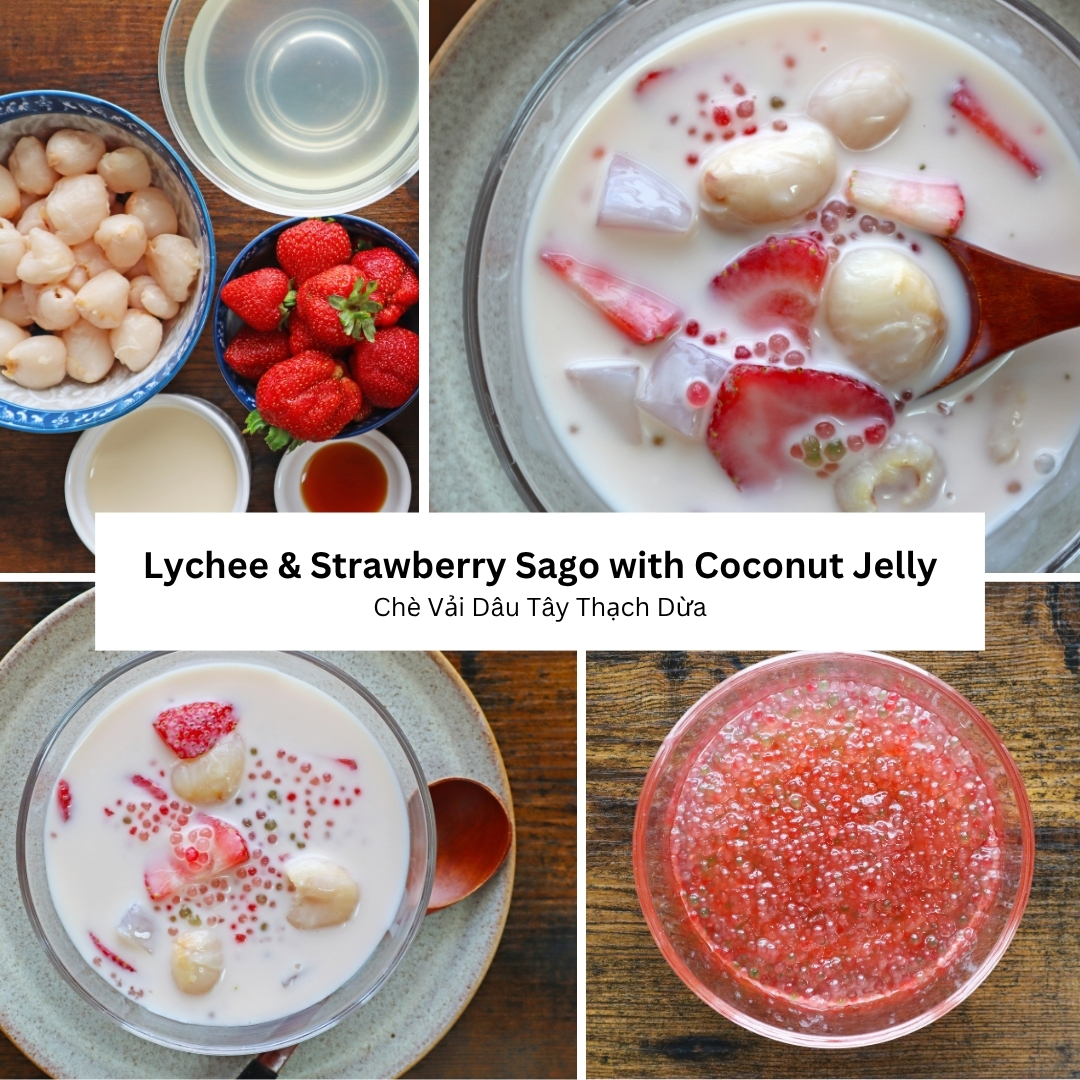
Many modern sago recipes call for pureeing fruit in a blender, but this version keeps things refreshingly simple. You only need one saucepan to boil the pearls and a single bowl to whisk the coconut base. Keeping the fruits whole or neatly diced preserves their natural textures and creates a stunning contrast of colours. You can whip this dessert up ahead of time, let it chill in the fridge, and bring it out whenever family or guests arrive. It is effortlessly elegant, comforting, and guaranteed to brighten up your table.
Q&As on Lychee & Strawberry Sago with Coconut Jelly
1. What’s the difference between using evaporated milk and whole milk?
Evaporated milk gives the coconut mixture a richer, creamier taste because some of its water has been removed. Whole milk makes the dessert a little lighter and less rich. Both work well, so choose based on your preference. Since the recipe also includes sweetened condensed milk, the evaporated milk adds creaminess without making the dessert much sweeter.
2. What are tapioca pearls, and where do they come from?
Tapioca pearls are small, chewy balls made from tapioca starch, which comes from the cassava root. Cassava originated in South America and later spread to other parts of the world. In Southeast Asia, tapioca pearls became a more affordable alternative to traditional sago pearls, which are made from the starch of certain palm trees.
However, Taiwan made tapioca pearls famous through bubble tea, the beloved drink that emerged there in the 1980s. Today, tapioca pearls are enjoyed in Taiwanese drinks as well as many desserts across Southeast and East Asia.
People often use the words sago and tapioca pearls interchangeably in dessert recipes, including this one.
3. Can I adjust the sweetness of the dessert?
Absolutely! Start with the amount of condensed milk in the recipe, then taste the coconut mixture before adding the fruit and sago. Add a little more condensed milk if you like it sweeter, or use less lychee syrup for a lighter sweetness. Keep in mind that the canned lychees and nata de coco may also add sweetness.
4. Can I use other fruit instead of strawberries?
Yes, you can easily switch up the fruit! Fresh options like ripe mango, sweet blueberries, or diced peaches all pair wonderfully with the creamy coconut milk base. If you love mango, I also have a delicious recipe post for Mango Sago with Coconut Jelly that you should definitely check out. Whatever fruit you decide to use, remember to taste the mixture as you go and adjust the sweetness to your liking.
5. How long can lychee and strawberry sago be kept in the fridge?
Store the dessert in a covered container in the refrigerator and enjoy it within 1 to 2 days for the best flavour and texture. The sago may firm up as it chills, while the strawberries can soften and release some juice. Give it a gentle stir before serving, and avoid leaving it at room temperature for long.
Explore More Asian Desserts
If you enjoyed this Lychee & Strawberry Sago, there are plenty more delightful Asian desserts to discover. From creamy puddings to refreshing fruit-filled treats, each one brings its own lovely flavours and textures.
Be sure to explore the other dessert recipes on Việt Flavours, including my Mango Sago with Coconut Jelly. You might just find your next sweet favourite!
- Jade & Ivory Glutinous Rice Dumplings in Ginger Syrup (Chè Trôi Nước Lục Bạch)
- Vietnamese Fruit Cocktail (Chè Thái)
- Mango Sago with Coconut Jelly (Chè Xoài Thạch Dừa)
Recipe for Lychee & Strawberry Sago with Coconut Jelly
Equipment
- 1 saucepan
Ingredients
Sago, Fruit and Toppings:
- ½ cup small sago or tapioca pearls
- 1 can lychee drained
- 1½ cups fresh strawberries
- 1 cup nata de coco drained
Coconut Mixture:
- 1 can coconut milk approximately 400 mL
- 1 cup lychee syrup from the can
- ½ cup evaporated milk or whole milk
- 4 tablespoons sweetened condensed milk to taste
- ½ teaspoon vanilla extract optional
Instructions
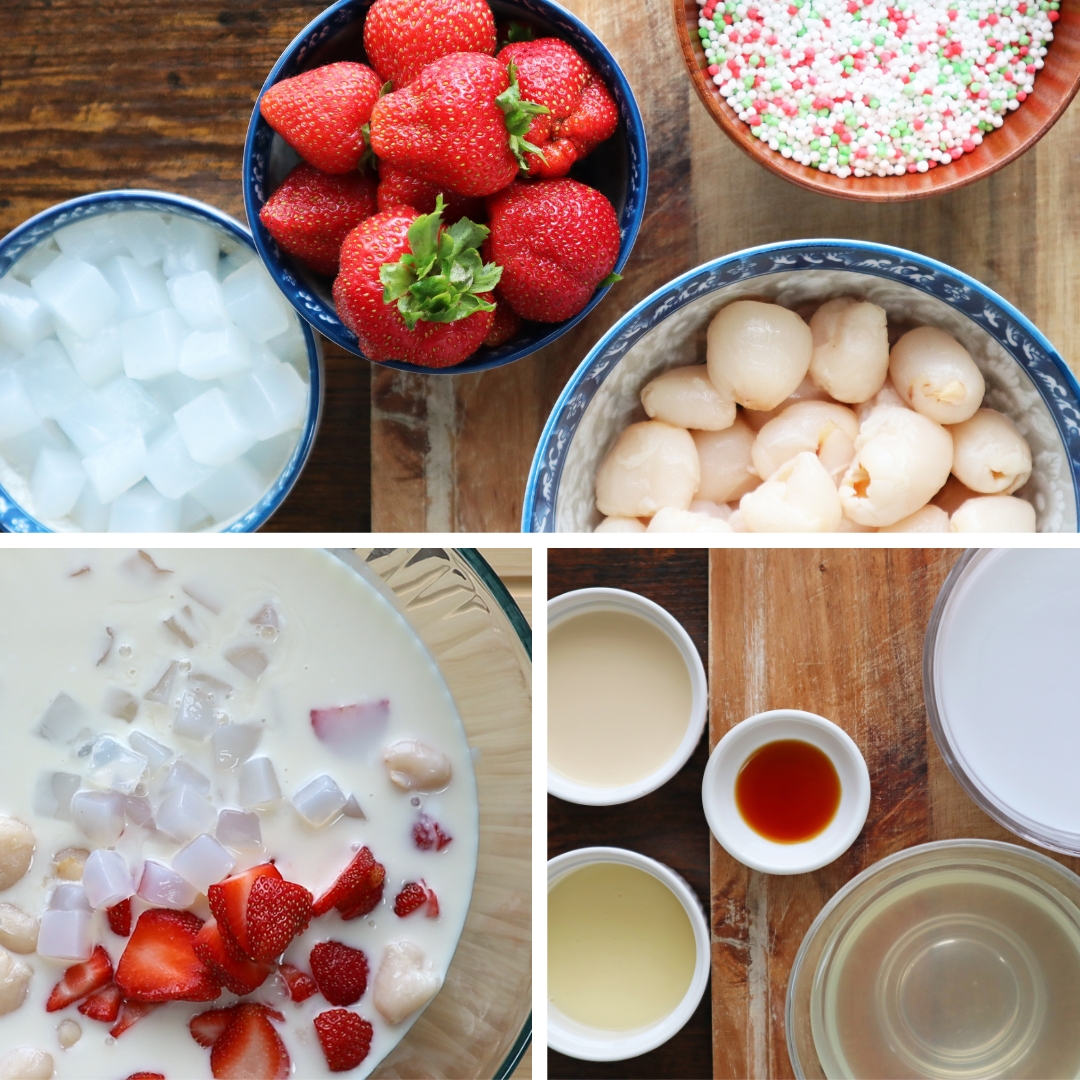
- Prepare the Ingredients:Bring 3½ cups of water to a boil in a saucepan.Add the sago and stir gently. Reduce the heat to medium-low and cook for 15 to 20 minutes.Stir occasionally to prevent the pearls from sticking together. The sago is ready when most of the pearls turn translucent, with only small white centres remaining.Turn off the heat, cover the saucepan, and let the sago sit for 5 minutes.Drain the sago in a fine-mesh strainer. Rinse it under cold running water until completely cool and no longer sticky.Slice or dice the strawberries to your preferred size.
- Assemble:In a large bowl, combine the coconut milk, evaporated milk, condensed milk, vanilla extract, and lychee syrup. Stir well.Add the cooked sago, lychee, diced strawberries, and nata de coco. Mix gently to avoid crushing the fruit.Taste and add more condensed milk if you prefer a sweeter dessert.Cover and refrigerate for at least 1 hour.
- Serve:Serve chilled and garnish with extra strawberries, lychee, and coconut jelly.