

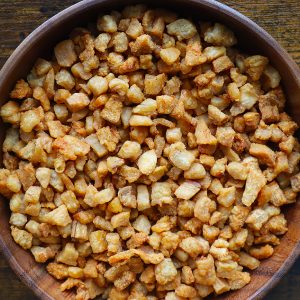
Crispy Fried Pork Lard (Tóp Mỡ)
If you have ever enjoyed a bowl of Vietnamese noodles or a plate of broken rice and wondered what adds that irresistible crunch and rich savoury flavour, the answer is often Tóp Mỡ – crispy fried pork lard. In Vietnamese cuisine, this humble yet flavour-packed ingredient is a staple condiment, while in Chinese cooking, similar crispy lardons are also widely used to enhance texture and depth in a variety of dishes.
In this recipe from Viet Flavours, you will learn how to make perfectly golden-crisp Tóp Mỡ using a traditional water-rendering method. This technique not only helps the pork fat cook evenly, but also keeps the rendered lard clean and light in colour while minimizing oil splatter – making the process much safer and more approachable for home cooks.

These crunchy bites are incredibly versatile. Sprinkle them over noodle soups like hủ tiếu, mix them into scallion oil for rice dishes, or pair them with savoury sauces such as mắm kho quẹt. They also make a surprisingly addictive snack on their own – crispy, airy, and full of rich umami flavour.
As a bonus, this recipe also yields beautifully rendered pork fat, which can be stored and used later for stir-fries or drizzling over your favourite dishes for an extra boost of flavour.
Whether you are looking to elevate everyday meals or explore authentic Vietnamese cooking techniques, this crispy pork lard recipe is a must-try addition to your kitchen.
Q&As on Crispy Fried Pork Lard (Tóp Mỡ)
1. Where can I find pork fat to make this recipe at home?
You can easily find high-quality pork fat at most Asian supermarkets, where it is often conveniently pre-packaged and located in the refrigerated meat section. If you don’t see it on the shelves, don’t hesitate to visit your local butcher shop and ask for pork back fat or leaf fat specifically, as they frequently have it available behind the counter even if it isn’t displayed. Make sure to choose fat that is clean and firm for the best results; buying it in larger quantities like the 2.25 kilograms used in our recipe is quite common since it shrinks significantly during the rendering process. Checking with a local butcher is also a great way to ensure you are getting the freshest fat possible, which will result in a much cleaner and more neutral-tasting lard.
2. What are the different methods typically used to make Tóp Mỡ, and how do they compare?
There are several ways to prepare crispy pork lard, ranging from the traditional stovetop method to more modern appliance-based techniques. The most popular traditional approach is the water-rendering method used by Viet Flavours, which involves simmering the fat in a bit of water first to ensure even cooking and an airy crunch without excessive oil splashing.
Alternatively, some cooks prefer the dry-fry method, where the fat is placed directly into a hot pan, though this requires constant supervision to prevent the lard from burning or becoming too hard. In recent years, using an air fryer has become a trendy alternative because it is hands-off and contains the mess, while oven-roasting is often used when preparing very large batches.
Each method aims for that signature golden-brown finish, but the water-rendering technique remains a favourite for achieving the perfect balance of a light, crispy texture and clean, white rendered oil.
3. What are the specific reasons for adding water to the pork fat at the beginning of the cooking process?
Adding water might seem counter-intuitive when you are trying to fry something, but it is actually the secret to achieving a professional-grade texture and quality.
The water acts as a natural temperature regulator, preventing the fat from getting too hot too quickly and scorching before the internal moisture has a chance to escape. This gentle simmering process also helps to soften the tough connective tissues and skin, which ensures that once the water evaporates and the actual frying begins, the lardons become light and airy-crisp rather than rock-hard. Furthermore, using water results in a much cleaner rendering process, producing a snowy-white, neutral-tasting lard oil that is perfect for later use in other dishes.
Ultimately, this technique is the key to getting that beautiful golden colour while keeping your kitchen safer by significantly reducing aggressive oil splashing.

4. I’m afraid of aggressive oil splashing while frying. How can I minimize that and stay safe?
Dealing with oil splatter can definitely be intimidating, but there are several effective ways to keep your kitchen calm and safe.
One of the most important tips based on my experience is to ensure you are using only the pork fat and not the pork skin; the skin contains a lot of moisture and collagen, which are the primary culprits behind those sudden, aggressive “explosions” in the hot oil.
Additionally, using the water-rendering method is a game-changer, as it allows the fat to heat up gradually and lets moisture evaporate steadily before the high-temperature frying begins. To further reduce mess, always make sure you pat the pork fat dry with paper towels after any blanching or washing steps to remove surface water.
Finally, keeping your heat at a steady medium or medium-low level rather than a high flame will ensure the fat renders smoothly without the violent popping that happens when the temperature becomes too intense.
5. How long can I store my fried pork lard, and what is the best way to keep it fresh?
To keep your fried pork lard as crunchy as possible, it is essential to let the pieces cool down completely before placing them in an airtight container. At room temperature, they will stay fresh and delicious for about three to five days when kept in a cool, dry spot away from direct sunlight.
If you would like them to last longer, you can store the container in the refrigerator for up to two or three weeks, or even in the freezer for several months. Just keep in mind that they may lose a bit of their signature crunch over time when chilled, but you can easily bring that airy texture back by popping them into an air fryer or a low oven for a few minutes before serving. Always make sure to use a clean, dry utensil when scooping them out to prevent any moisture from entering the container, which helps ensure they don’t become soggy or spoil prematurely.
Recipe for Crispy Fried Pork Lard (Tóp Mỡ)
Equipment
- 1 large pot (for blanching)
- 1 large non-stick skillet
Ingredients
- 2.25 kilograms pork fat (cleaned)
- A few slices of ginger along with some garlic and shallots optional
Instructions
- Fill a large pot with water, add a pinch of salt, and bring to medium-high heat. Add the pork fat and blanch for about 5 minutes. Remove and set aside.
- Once slightly cooled and firm, dice the pork fat into pieces about 0.5 inches thick. Keep in mind they will shrink during frying, so don’t cut them too small.
- Place the diced pork fat into a large non-stick skillet. Add enough water to almost cover the fat. Turn heat to medium and stir gently.
- As the pork begins to turn lightly golden, add the optional ginger, garlic, and shallots. Reduce heat to medium-low and let it simmer. Stir occasionally to prevent sticking.
- Remove the aromatics. When the pork pieces float and turn golden brown, immediately strain them out to avoid overcooking.
- Let the crispy lard cool completely, then store in an airtight container.
- The rendered lard oil can be stored separately and used for cooking, such as stir-frying or drizzling over dishes.