

Korean Pork Bone Soup (Gamjatang)
Korean Pork Bone Soup, also known as Gamjatang, is a hearty and comforting dish. It features tender pork neck bones, potatoes, napa cabbage, and a rich, spicy broth. The pork bones simmer slowly until the meat becomes wonderfully tender. At the same time, the broth develops deep savoury flavour from Korean soybean paste, chili paste, chili flakes, and aromatic ingredients.
What makes this Korean soup especially satisfying is its combination of textures. The potatoes release their natural starch as they cook. This adds body and richness to the broth. Meanwhile, the napa cabbage becomes tender and absorbs the bold Korean seasonings. Finish the soup with sesame oil, green onions, sesame seeds, and optional perilla leaves. The result is a warming meal that is perfect for cool days or whenever you crave something hearty and flavourful.
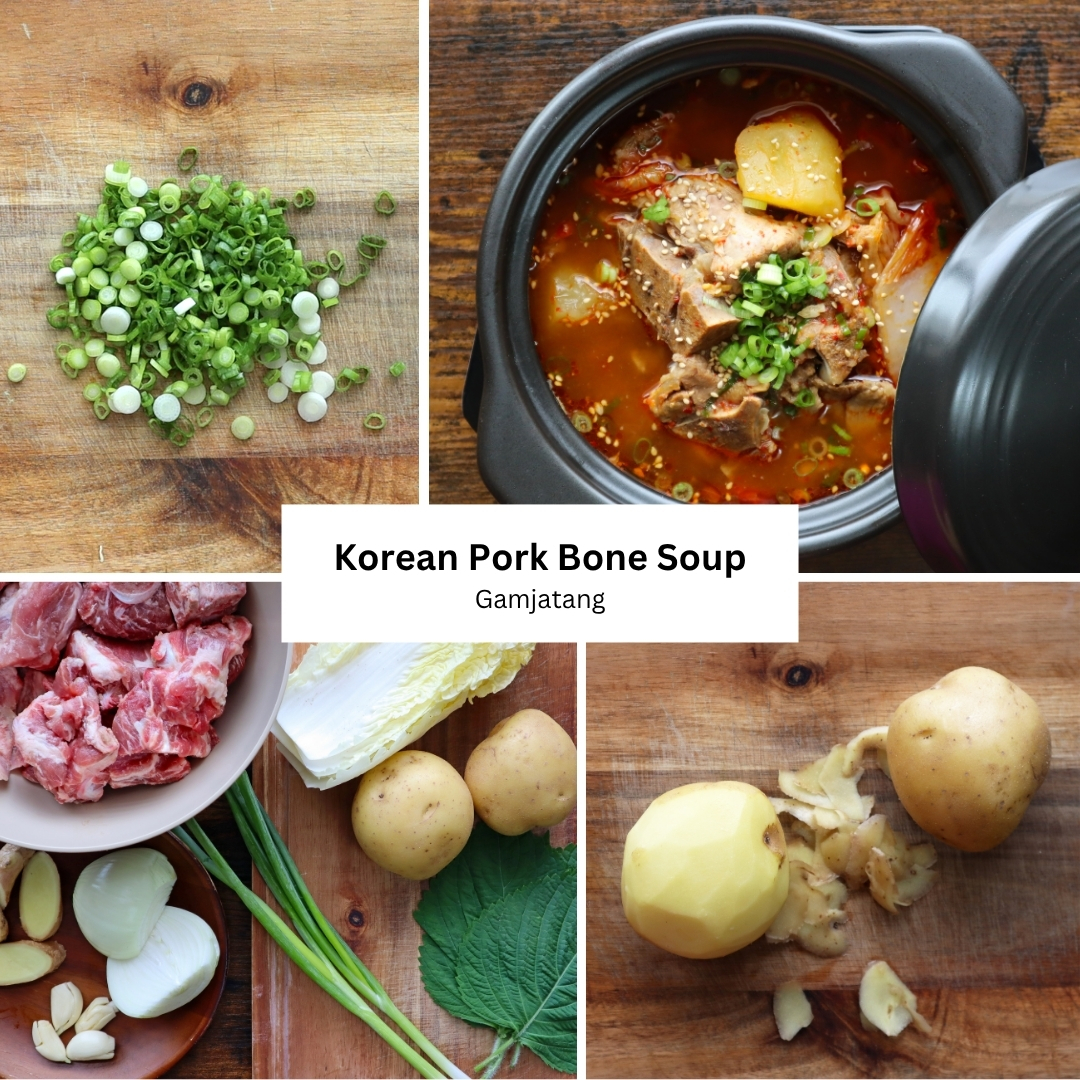
In this recipe, first soak, blanch, and rinse the pork bones to create a cleaner-tasting broth. Then simmer them slowly with onion, garlic, and ginger. Add the seasonings and vegetables next. Serve this traditional Korean pork bone soup hot with steamed rice and kimchi for a deeply satisfying meal at home.
Why You’ll Love This Korean Pork Bone Soup (Gamjatang) Recipe
- Tender, fall-apart pork cooked directly on the bones
- Rich and savoury Korean-style broth
- Perfect balance of spice, umami, and natural sweetness
- Comforting potatoes and tender napa cabbage
- Great served with steamed rice and kimchi
- Ideal for family meals and chilly evenings
Q&As on Korean Pork Bone Soup (Gamjatang)
1. What are the best types of pork bones to use for an authentic-tasting soup?
When making traditional Korean Pork Bone Soup (Gamjatang), the absolute best choices are pork neck bones or pork spine bones. These specific cuts are the gold standard. They are rich in marrow and connective tissue. During the long, slow simmering process, these break down and create a deep, collagen-rich broth with a hearty mouthfeel. Unlike cleaner leg bones, neck and spine bones also hold small pockets of dark, succulent meat tucked into their crevices. That meat becomes incredibly tender and “fall-off-the-bone” soft. If you cannot find these specific cuts at your local butcher, you can use pork back ribs or rib tips for a meatier version. The broth may be slightly lighter in body, though.
2. Do I really need to soak the pork bones for 1 to 2 hours, or can I just skip straight to blanching?
Skipping the soak and moving directly to blanching will still result in a good soup. However, taking the extra time for a one- to two-hour cold water soak is highly recommended for a truly restaurant-quality broth. This traditional step, known as removing the “blood water,” helps draw out deep-seated impurities and excess blood from the marrow and bone cavities. Blanching alone might not fully reach them. By soaking the bones first, you ensure that your final broth has a much cleaner, more refined flavour profile. It avoids any greyish discolouration or metallic aftertaste. On the Viet Flavours channel, we always recommend this thorough preparation. It allows the vibrant flavours of the Korean spices to shine through without being clouded by “funky” pork odours. The result is a much more elegant and professional-looking dish.
3. Where can I find the specific Korean ingredients like doenjang, gochujang, and gochugaru for this recipe?
You can find these essential seasonings at most well-stocked Asian supermarkets in the international or sauce aisles. However, if you have a local Korean supermarket nearby, that is definitely the best place to shop. They will offer a much wider variety of brands and different heat levels to suit your preference. When shopping, look for doenjang (the fermented soybean paste) usually in a brown tub. Look for gochujang (the spicy-sweet red chili paste) in a red tub. Look for gochugaru (the vibrant red chili flakes) in clear bags. These three ingredients form the “holy trinity” of Korean cooking. They also have a very long shelf life in the refrigerator. Once you have them, you can recreate many of your favourite Korean dishes at home.
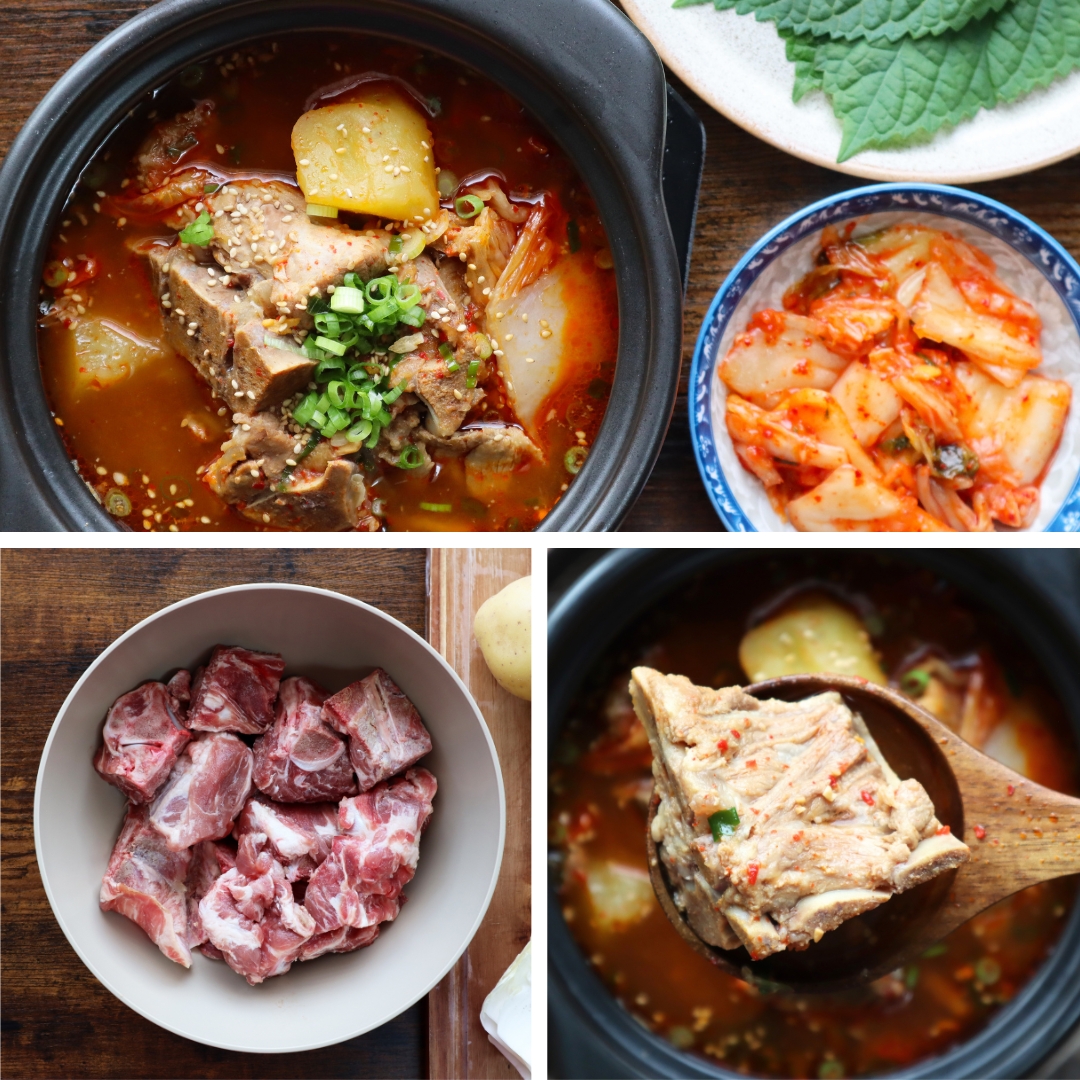
4. What are perilla leaves, and why are they recommended as a pairing for this soup?
Perilla leaves, known as kkaennip in Korean, are a fragrant herb from the mint family. They look somewhat like a large, jagged-edged shiso leaf. They have a very distinct, complex flavour profile – a unique blend of mint, basil, and a hint of anise or licorice. In a rich dish like Gamjatang, these leaves are highly recommended. Their bright, peppery aroma perfectly balances the heavy, savoury richness of the pork bone broth. When you add them right at the end of cooking, they infuse the soup with a fresh, herbal layer. This layer is considered the hallmark of an authentic Korean dining experience. You can usually find them in the produce section of Korean or larger Asian supermarkets. They truly elevate the final dish from a simple stew to something deeply aromatic and traditional.
5. Why does the soup taste better the next day, and what is the best way to reheat it?
Like many slow-cooked stews and bone broths, Korean Pork Bone Soup often tastes even more incredible the following day. The complex flavours of the doenjang and gochujang have more time to fully meld together. The resting period also allows the pork meat to reabsorb the savoury broth, making it even juicier. Additionally, as the soup cools, the natural starches from the potatoes further thicken the liquid. This results in a silkier, richer mouthfeel upon reheating. When you’re ready for leftovers, reheat the soup gently in a pot over medium-low heat rather than using a microwave. This ensures the pork bones heat through evenly without toughening the meat. If the broth has become too thick or “jelly-like” in the fridge – which is a great sign of a collagen-rich soup – simply add a small splash of water or unsalted broth. This brings it back to your preferred consistency.
More Korean Classics to Explore
If you enjoyed this Korean Pork Bone Soup, you’ll be happy to know that Korean cuisine offers so many more deeply satisfying, “soul-warming” dishes! These recipes are staples in my kitchen because of their bold, balanced flavours and the way they turn simple ingredients into something truly special.
I’ve shared a few of my other favourite Korean recipes that you might love just as much. Whether you are looking for more comforting soul food or a quick and vibrant meal, check out these recipes:
- Korean Ground Beef & Rice Cake Soup (Tteokguk)
- Japchae (Sweet & Savoury Korean Glass Noodles with Beef)
- Osam Bulgogi (Spicy Squid and Pork Stir-Fry)
Recipe for Korean Pork Bone Soup (Gamjatang)
Equipment
- 1 large soup pot
Ingredients
Main Ingredients:
- 1.1 kilograms pork neck bones (or pork spine bones)
- 150 grams napa cabbage
- 2 medium potatoes
- 1 onion, halved
- 4 cloves garlic, crushed
- 5 thick slices ginger
- 2 green onions
- A few perilla leaves optional, for authentic flavour
Broth & Seasoning:
- 2 tablespoons doenjang (Korean soybean paste)
- 2 tablespoons gochujang (Korean chili paste)
- 1 tablespoon gochugaru (Korean chili flakes)
- 1 tablespoon soy sauce
- 1 tablespoon fish sauce
- 1 tablespoon sesame oil
- Toasted sesame seeds for garnish
Instructions
- Prepare and Simmer the Pork Bones:Place the pork neck or spine bones in a large bowl and cover them with cold water. Soak for 1-2 hours to help remove excess blood. Drain and rinse the bones thoroughly under running water.Transfer the bones to a large soup pot and add enough water to cover them. Bring the water to a boil and boil the bones for 10 minutes.Drain the bones, then rinse them thoroughly under running water. Clean the pot well to remove any residue before using it for the soup.Return the cleaned bones to the pot. Add the halved onion, crushed garlic, and ginger slices.Pour in enough water to generously cover the bones, allowing for some evaporation during the long cooking time and room for the vegetables that will be added later.Bring the pot to a gentle simmer over medium-low heat. Cook for 1½-2 hours, or until the broth becomes rich and milky and the pork is very tender.
- Prepare the Vegetables:While the pork bones are simmering:Chop the napa cabbage into bite-sized pieces.Cut the potatoes into large chunks.Finely chop the green onions.Set aside the perilla leaves if using.
- Cook:After the pork has simmered for approximately two hours, check that the meat is tender. Remove and discard the onion and ginger, as they have already infused the broth with their flavour.Add the soy sauce, fish sauce, doenjang, gochujang, and gochugaru. Stir well until the seasonings are fully dissolved and the broth turns a vibrant red.Add the potato chunks to the seasoned broth. Simmer for 15-20 minutes, or until the potatoes are tender. Their natural starch will help give the broth a richer texture and fuller flavour.Add the chopped napa cabbage and continue simmering for approximately 10 minutes, until the cabbage is tender and has absorbed the flavourful broth.Taste the soup and adjust the seasoning as needed. Add a little mushroom powder and salt, if desired.Drizzle in the sesame oil, then turn off the heat. Sprinkle in the chopped green onions and add the perilla leaves, if using.
- Serve:Ladle the soup into serving bowls. Garnish with toasted sesame seeds and additional chopped green onions.Serve hot with steamed rice and kimchi on the side.