

Korean Ground Beef & Rice Cake Soup (Tteokguk)
Korean Rice Cake Soup, or Tteokguk, is a comforting dish made with tender rice cakes simmered in a savoury broth. Cooks top it with beautifully prepared garnishes like egg strips, green onions, sesame seeds, and seaweed. Although light, this classic Korean soup delivers a satisfying meal with clean flavours, delicate presentation, and soothing warmth.
What makes Tteokguk especially special is its strong connection to Korean Lunar New Year traditions. For generations, families have served this dish as a celebratory meal to welcome a fresh start and a prosperous year ahead. In Korean culture, people believe that eating a bowl of Tteokguk marks the start of another year of life. This tradition connects the dish with ageing, renewal, and family gatherings.
The sliced rice cakes used in Tteokguk are traditionally shaped like thin oval coins, symbolizing wealth, prosperity, and good fortune. Their white colour also represents purity and a clean beginning, making this dish especially fitting for New Year celebrations. Combined with a clear, nourishing broth and carefully prepared toppings, Tteokguk reflects the Korean culinary appreciation for balance, refinement, and symbolism.
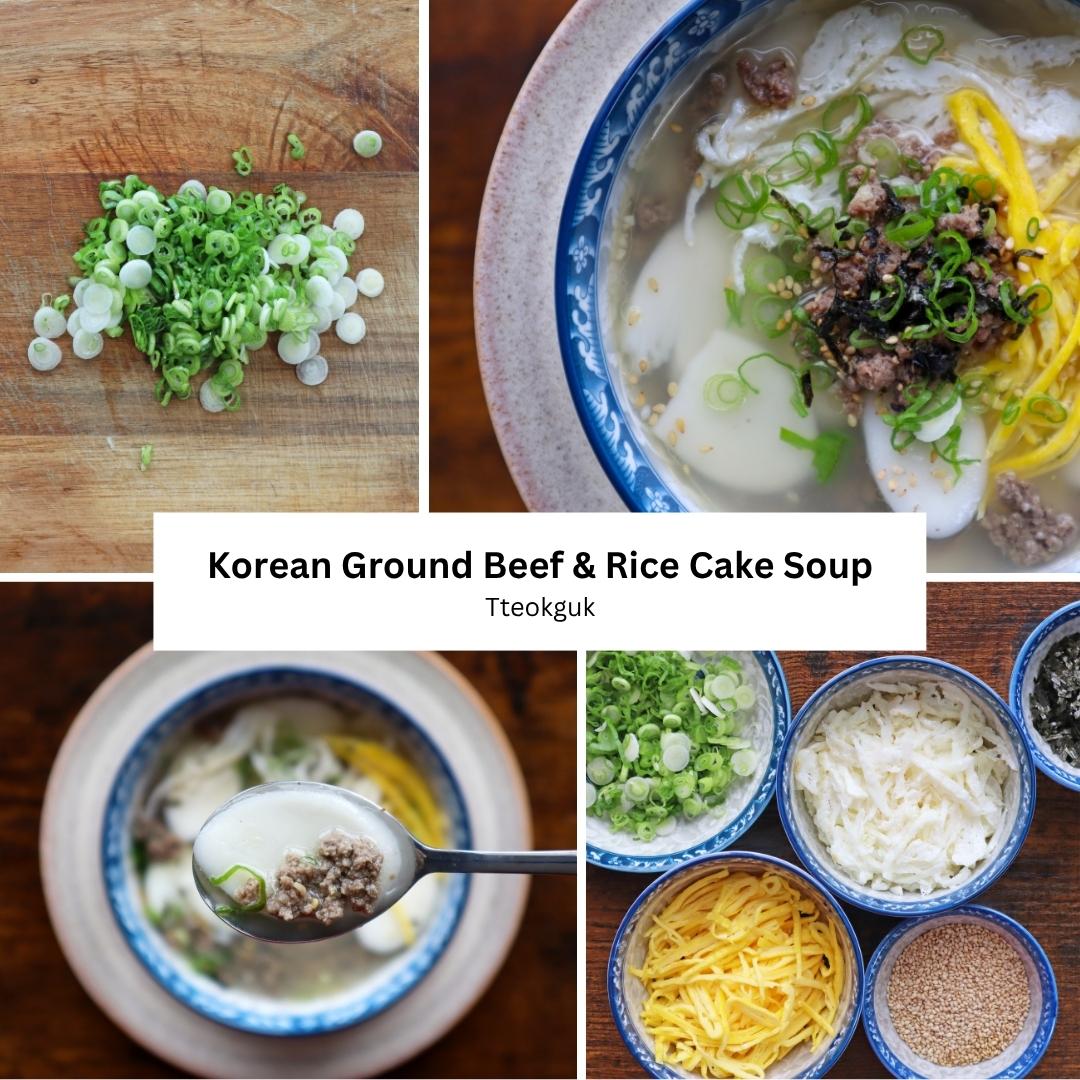
Historically, Tteokguk dates back to Korea’s earlier dynastic periods and became closely tied to New Year rituals and ancestral traditions. Over time, it evolved into one of the most iconic holiday foods in Korean cuisine. Today, many families still enjoy Tteokguk on New Year’s Day, while people also savour it year-round for its comforting simplicity and elegant character.
This version of Korean Rice Cake Soup brings together chewy rice cakes, flavourful beef, and delicate egg ribbons in a bowl that feels both humble and celebratory. Whether you are exploring Korean cuisine for the first time or looking to recreate a meaningful traditional dish at home, Tteokguk is a beautiful recipe that offers both comfort and cultural depth.
Q&As on Korean Ground Beef & Rice Cake Soup (Tteokguk)
1. What exactly are the rice cakes used in this recipe, and where can I find them for the best results?
Rice cakes used in this recipe are Korean sliced rice cakes, known as tteokguk tteok (떡국떡). They are made from rice flour that has been steamed and pounded into a soft, chewy dough, then shaped into long cylinders and thinly sliced into oval pieces. Cooks traditionally add these oval slices to Tteokguk because they retain their tender, slightly chewy texture in hot broth.
You can usually find these rice cakes at Korean or Asian grocery stores, often in the refrigerated or frozen section. Look for labels such as “sliced rice cakes” or “rice cake slices for soup.” Fresh versions are softer and cook a bit quicker, while frozen ones are more common and just need a short soak or thaw before use.
If you don’t have access to a Korean market, check larger international supermarkets or online Asian grocery retailers. While there isn’t a perfect substitute, it’s best to avoid swapping with Japanese mochi or puffed rice cakes, as their texture and purpose are quite different.
2. I noticed this recipe uses rock sugar to season the broth. What exactly is this ingredient, and why is it preferred over standard granulated sugar?
Rock sugar, also known as “sugar candy,” is a type of unrefined sugar made from crystallized sugar cane juice. It comes in large, translucent lumps that are either clear or pale yellow. Unlike regular granulated sugar, which delivers a sharp and immediate sweetness, rock sugar offers a much cleaner, more mellow, and subtle sweet profile. Cooks love this gentle sweetness because it enhances the natural flavours of the other ingredients without overpowering them. It also doesn’t make the dish feel “cloyingly” sweet.
In a refined dish like Tteokguk, we prefer rock sugar because it adds a beautiful, glossy sheen to the broth. The sugar also provides a rounded balance to the salty and savoury notes of the dashi and beef. Because it dissolves more slowly, it integrates into the soup in a way that feels more “grown-up” than the quick hit of white table sugar. This “secret ingredient” gives professional and traditional broths their smooth, multi-dimensional finish. That finish is what defines high-quality Asian cuisine.
3. This recipe uses beef, but must traditional Korean Rice Cake Soup include it?
Beef is the most iconic and popular choice for Tteokguk, largely because cooks historically associated rich, clear beef broth with luxury and celebratory meals. Still, it is certainly not the only traditional option. Depending on the region of Korea or specific family traditions, the protein and broth base can vary significantly. Options include chicken, pheasant, or even dried seafood like anchovies and kelp. Coastal areas often feature versions made with an oyster or seafood-based broth for a lighter, more briny finish. Cooks with busy lifestyles often prefer a simple anchovy stock for a quicker everyday meal.
We use ground beef in this recipe because it provides a deep, savoury foundation. However, the dish remains versatile enough to welcome various proteins. We can incorporate different options while still preserving the soup’s deep cultural and symbolic significance.
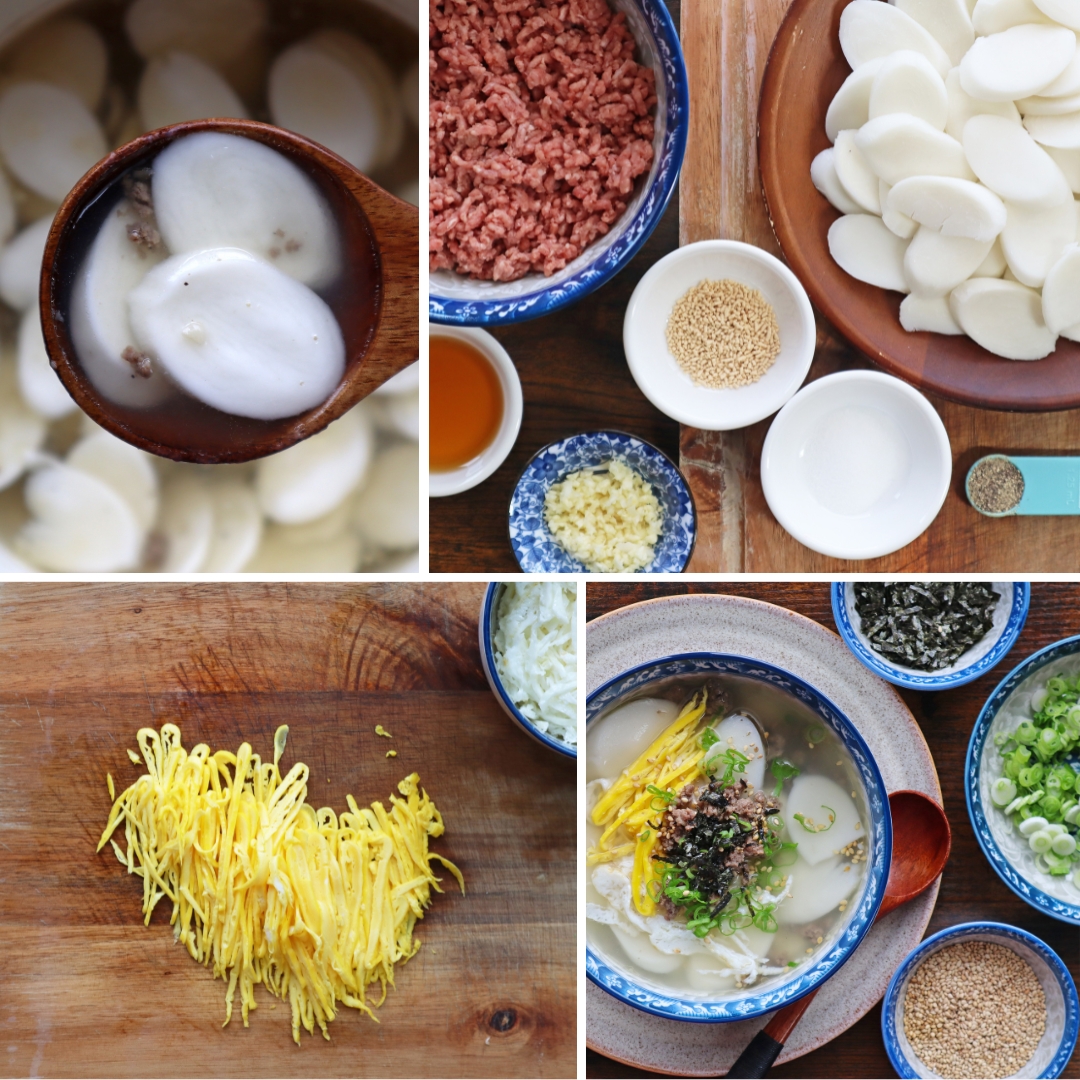
4. Why do we prepare the egg whites and yolks separately instead of cooking them together in this recipe?
Separating the egg whites and yolks is a traditional technique in Korean cuisine known as jidan.
Jidan serves both aesthetic and culinary purposes. Visually, it creates two distinct colours – bright yellow and clean white – which contribute to the beautiful, balanced presentation that is especially important in celebratory dishes like Tteokguk. This ties into the Korean philosophy of Obangsaek, where colour harmony represents balance and well-being. Furthermore, preparing the eggs as thin sheets and slicing them into delicate strips keeps the broth clear and refined. It also adds a soft, silky texture that contrasts nicely with the chewy rice cakes, elevating the dish from simple comfort food to something more elegant and ceremonial.
5. Can you store and enjoy this Korean Rice Cake Soup later, or does it taste best fresh?
You can absolutely store this soup in the fridge and enjoy it later. However, it definitely tastes best when you eat it fresh on the same day.
The main reason is the rice cakes. Over time, they tend to absorb the broth and become softer, thicker, and slightly less chewy. The broth itself will still taste great the next day, but the texture of the dish may change. When you store leftovers, keep the rice cakes and broth separate if possible, then reheat them together before serving. When reheating, you may also want to add a splash of water or broth to loosen the consistency. For the best flavour and texture, try to enjoy it within 1-2 days.
Explore More Delicious Recipes
If you enjoyed this comforting Korean Rice Cake Soup, be sure to explore more delicious recipes from Viet Flavours. Discover a selection of traditional Korean dishes, and comforting Asian recipes made with simple ingredients and full of authentic flavour. Whether you’re looking for another warming soup or want to try something new from Korean cuisine, there’s plenty of inspiration waiting for you.
- Korean Pork Bone Soup (Gamjatang)
- Pork Bone and Daikon Radish Soup
- Stuffed Bitter Melon Soup (Canh Khổ Qua Dồn Thịt)
Recipe for Korean Ground Beef & Rice Cake Soup (Tteokguk)
Equipment
- 1 small non-stick skillet
- 1 medium soup pot
Ingredients
Rice Cakes & Protein:
- 250 grams sliced rice cakes
- 200 grams ground beef
Beef Marinade:
- 1 tablespoon freshly minced garlic
- 1 tablespoon sesame oil
- ½ teaspoon salt
- ½ teaspoon mushroom powder
- ¼ teaspoon ground black pepper
Soup Broth:
- 4 cups water
- 3 slices ginger
- A few pieces rock sugar optional
- 1 packet Japanese umami dashi soup stock mix optional
- Salt and mushroom powder, to taste
Toppings:
- 3 eggs
- 2 green onions
- Seaweed flakes
- Roasted sesame seeds
Instructions
- Prepare the Ingredients:In a bowl, combine the ground beef with minced garlic, sesame oil, salt, mushroom powder, and black pepper. Mix everything thoroughly until well combined, then set it aside to marinate for about 10 minutes.While the beef is marinating, thinly slice the green onions and set them aside for later use as a fresh garnish.Next, separate the egg whites and yolks into two separate bowls. Lightly beat each one until smooth.Heat a lightly oiled non-stick pan over medium heat. Pour in the egg whites, gently swirling the pan to form a thin, even layer. Cook until just set, then carefully flip and cook the other side briefly before removing. Repeat the same process with the egg yolks.Once the egg sheets have cooled slightly, roll each one into a log and slice them thinly into delicate strips. Set aside for garnishing.
- Cook:Place a soup pot over medium-high heat and add the marinated beef. Cook for 1 to 2 minutes, breaking it up as it browns. Once cooked, remove about one-third of the beef and set it aside for garnish, leaving the remaining beef and juices in the pot.Pour in the water and bring it to a boil. Add the ginger slices and dashi stock mix, then reduce the heat and let it simmer gently for about 15 minutes. As it heats, skim off any impurities that rise to the surface to keep the broth clear. After simmering, remove the ginger slices and the stock packet. Taste the broth and adjust the seasoning with rock sugar, salt, or mushroom powder as needed.Add the rice cakes to the pot and let them boil for 3 to 4 minutes, or until they become soft and tender.
- Serve:Ladle the hot soup into serving bowls. Top with the reserved beef, egg strips, sliced green onions, roasted sesame seeds, and seaweed flakes. Serve immediately while hot and enjoy!