

Chinese Pork Bone and Corn Soup
There are some dishes that feel like a warm hug in a bowl, and this Chinese Pork Bone and Corn Soup is exactly that. Known in Cantonese as 清甜粟米排骨湯 (Ching Tim Suk Mai Pai Gwat Tong), this is a beloved classic in Chinese homes – particularly in Cantonese households – where clear, nourishing broths form the heart of everyday cooking.
What makes this version special is a simple but brilliant technique: using both corn cut into chunks and loose corn kernels in the same soup. The chunks give the broth that deep, natural sweetness everyone loves, while the loose kernels add texture, colour, and a delightful spoonful-by-spoonful eating experience. It is a small detail that makes a big difference – both in flavour and in presentation.
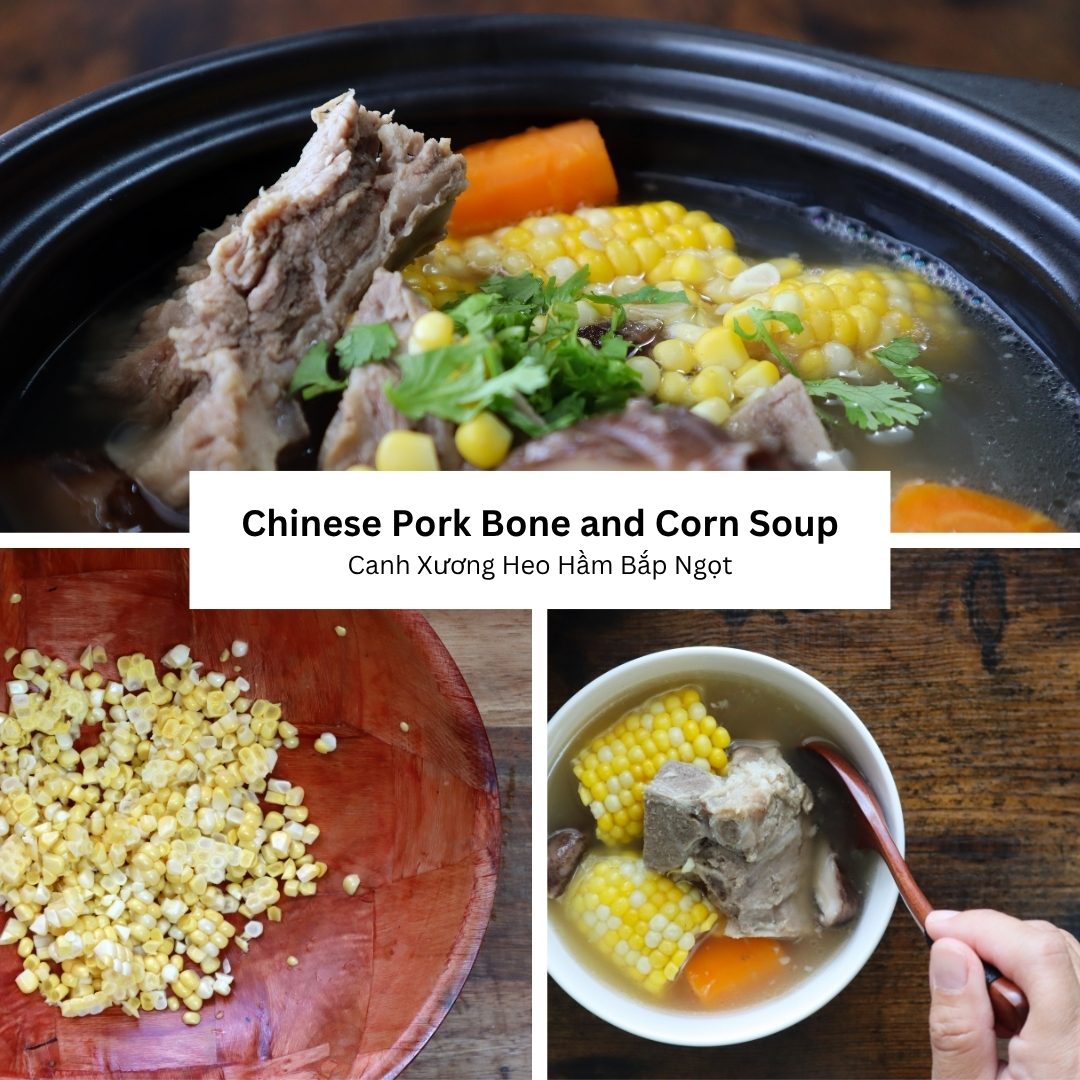
Whether you are cooking for your family on a weekday evening or looking for a wholesome dish to impress guests, this soup is approachable, deeply satisfying, and absolutely worth a spot in your regular recipe rotation.
What Is Chinese Pork Bone and Corn Soup?
This soup belongs to the Cantonese “Ching Tong” (清湯) tradition – a style of slow-simmered, clear broth soup that is central to Chinese home cooking, particularly in Guangdong Province, Hong Kong, and Chinese communities throughout Southeast Asia and beyond.
Unlike thick, starchy soups, Ching Tong soups are:
- Crystal-clear in appearance
- Naturally sweet from the ingredients themselves – not added sugar
- Gently seasoned, letting the ingredients speak for themselves
- Slow-cooked to extract maximum flavour and nutrition from bones and vegetables
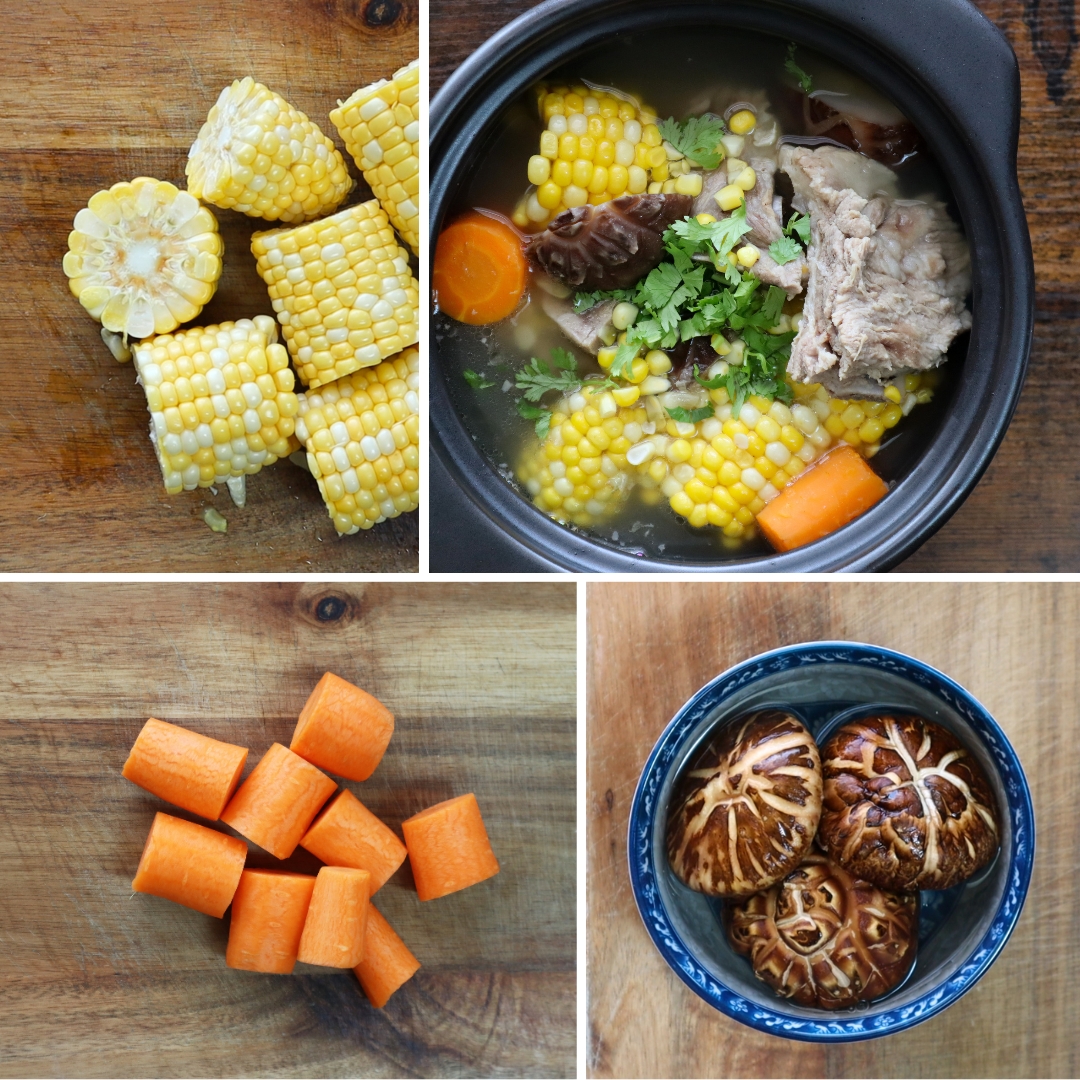
The combination of pork neck bones, sweet corn, carrots, and dried shiitake mushrooms is a classic flavour profile. Each ingredient plays a role: the pork bones bring richness and body; the corn contributes sweetness and colour; the carrots add earthiness; and the shiitake mushrooms lend a subtle savoury depth.
Q&As on Chinese Pork Bone and Corn Soup
1. What cut of pork is best for this soup?
Pork neck bones are the top choice for this recipe, and for good reason. They contain a generous balance of bone, meat, and connective tissue, which slowly breaks down during simmering to produce a broth that is rich, full-bodied, and slightly silky in texture. The collagen released from the bones also gives the soup a wonderful mouthfeel that you simply cannot replicate with boneless cuts. If you prefer a meatier result with larger pieces to enjoy, pork spare ribs (pai gwat) are an excellent alternative – they are a classic choice in Cantonese households. For the richest, most layered broth, consider using a combination of both neck bones and spare ribs together.
2. Can I use canned or frozen corn instead of fresh?
Fresh sweet corn is strongly recommended for this recipe and will give you the best results by far. Fresh corn releases its natural sugars directly into the broth as it simmers, creating that signature, clean sweetness that makes this soup so special – no added sugar or seasoning required. Canned corn has already been processed and tends to contribute very little flavour to the broth itself. Frozen corn kernels are a more acceptable substitute for the loose kernels portion of the recipe, though the depth of flavour will be noticeably milder. If you do use frozen kernels, add them towards the end of cooking rather than early in the simmering stage to avoid overcooking. Whenever possible, opt for fresh corn – particularly sweet corn varieties, which are widely available at most supermarkets and Asian grocery stores.
3. Why do I need to soak AND blanch the pork bones?
These two steps might seem like extra work, but they are the foundation of a truly clean and beautiful broth. Soaking the raw bones in cold water for 30 minutes draws out a significant amount of excess blood trapped within the bone marrow and surrounding meat – blood that, if left in, can make the broth murky and give it an unpleasant gamey odour. Blanching in boiling water then removes any remaining impurities that the soaking did not fully address, causing them to rise to the surface as foam, where they can be easily drained away. Rinsing the bones under cold running water after blanching gives you a completely clean starting point for your broth. Together, these steps are what separates a truly clear, refined Cantonese-style soup from a cloudy, less refined one.
4. Is this soup suitable for young children?
This soup is one of the most gentle and family-friendly dishes you can serve, making it a wonderful option for households with young children. The broth is mild, naturally sweet, and free from strong spices or bold seasonings – flavours that young palates tend to enjoy without hesitation. The corn and carrots add a familiar sweetness that children typically love, and the pork is soft and easy to eat. For very young children or toddlers, you may wish to omit the ground white pepper entirely, as even a small amount can be a little too sharp for sensitive palates. The rock sugar is entirely optional, as the natural sweetness from the corn is more than sufficient on its own. The loose corn kernels are also a particularly child-friendly element – easy to spoon up and fun to eat. This is truly a soup the whole family can gather around and enjoy together.
5. Can I make this soup in an Instant Pot or pressure cooker?
Yes, this soup can absolutely be adapted for a pressure cooker if you are short on time. After blanching and rinsing the pork bones, add them to the pressure cooker along with the ginger slices, whole green onions, and the reserved bare corn cob. Cook on high pressure for approximately 25-30 minutes, then carefully release the pressure. Remove and discard the aromatics, then add the corn chunks, carrots, shiitake mushrooms, and loose corn kernels. Seal and cook on high pressure for a further 8-10 minutes, then release the pressure again. Season to taste before serving. One thing to keep in mind is that pressure-cooked broths can sometimes appear slightly less crystal-clear than a long-simmered stovetop version, simply due to the more vigorous cooking environment inside the cooker. The flavour will still be delicious, but the visual clarity may differ slightly from the traditional method.

Love This Pork Bone & Corn Soup? Explore More Comforting Soup Recipes
Enjoyed this naturally sweet and savoury Chinese pork bone soup? Discover more comforting Asian soup recipes made with nourishing ingredients, tender pork bones, and clear, flavourful broths. From nourishing everyday soups to slow-simmered traditional favourites, these recipes are perfect for warming the body and bringing comforting flavours to the dinner table:
- Pork Bone and Daikon Radish Soup
- Korean Ground Beef & Rice Cake Soup (Tteokguk)
- Stuffed Bitter Melon Soup (Canh Khổ Qua Dồn Thịt)
Recipe for Chinese Pork Bone and Corn Soup
Equipment
- 1 large soup pot
Ingredients
- 900 grams pork neck bones
- 3 ears fresh sweet corn
- 2 medium carrots
- 3 dried shiitake mushrooms
- 3 slices fresh ginger
- 2 green onions
For seasoning (to taste):
- Salt, ground white pepper, rock sugar, mushroom powder
Instructions
- Prepare the Ingredients:Place the pork neck bones in a large bowl and cover them with cold water. Let them soak for about 30 minutes to help draw out any excess blood.While the pork is soaking, place the dried shiitake mushrooms in a separate bowl. Cover them with cold water and soak for about 1 hour.Take one ear of corn and carefully cut the kernels from the cob. Set the kernels aside, and reserve the bare cob. It will be simmered in the broth later to add extra natural sweetness.After 30 minutes, drain the pork bones and transfer them to a large soup pot. Cover them with fresh, cold water and bring the pot to a boil over high heat. Once boiling, cook the bones for 3-5 minutes, allowing the foam and impurities to rise to the surface. Drain the bones and rinse them thoroughly under cold running water. Give the pot a quick clean before continuing.
- Cook:Return the cleaned pork neck bones to the pot. Add the ginger slices, green onions, and the reserved corn cob. Pour in enough fresh water to fully cover the pork bones. Bring the soup to a boil over high heat, then reduce the heat to low. Partially cover the pot and simmer gently for 45 minutes.While the broth is simmering, cut the carrots into large chunks. Cut the remaining ears of corn into similar-sized pieces. Drain the soaked shiitake mushrooms, remove the tough stems, and slice the mushrooms into bite-sized pieces.
- Adding the Vegetables:After 45 minutes, check the soup. The broth should look clear and beautiful, and the pork should be tender, although it may not yet be fall-off-the-bone tender. Remove and discard the ginger slices, green onions, and reserved corn cob.Add the corn chunks, carrots, sliced shiitake mushrooms, and reserved loose corn kernels to the pot. Simmer for another 25-30 minutes, or until the vegetables are tender and the pork is fully cooked.The broth should already be naturally and delicately sweet from the pork and corn. Add: ¼ teaspoon salt, ¼ teaspoon ground white pepper, a few pieces of rock sugar. Adjust the seasoning to taste. Let the soup cook for another 5 minutes, then turn off the heat.
- Serve:Ladle the soup into serving bowls, making sure each bowl includes plenty of pork, carrots, loose corn kernels, and broth. Garnish with chopped green onions or fresh cilantro for a pop of colour. Serve hot and enjoy this comforting Pork Bone and Corn Soup.