

Pork Bone, Winter Melon and Dried Scallop Soup
There is something uniquely comforting about a fragrant pot of soup quietly bubbling on the stove, especially when the house begins to fill with the savoury aroma of slow-simmered pork bones. This Pork Bone, Winter Melon, and Dried Scallop Soup holds a special place at the family table, offering warmth and gentle refreshment in every single spoonful.
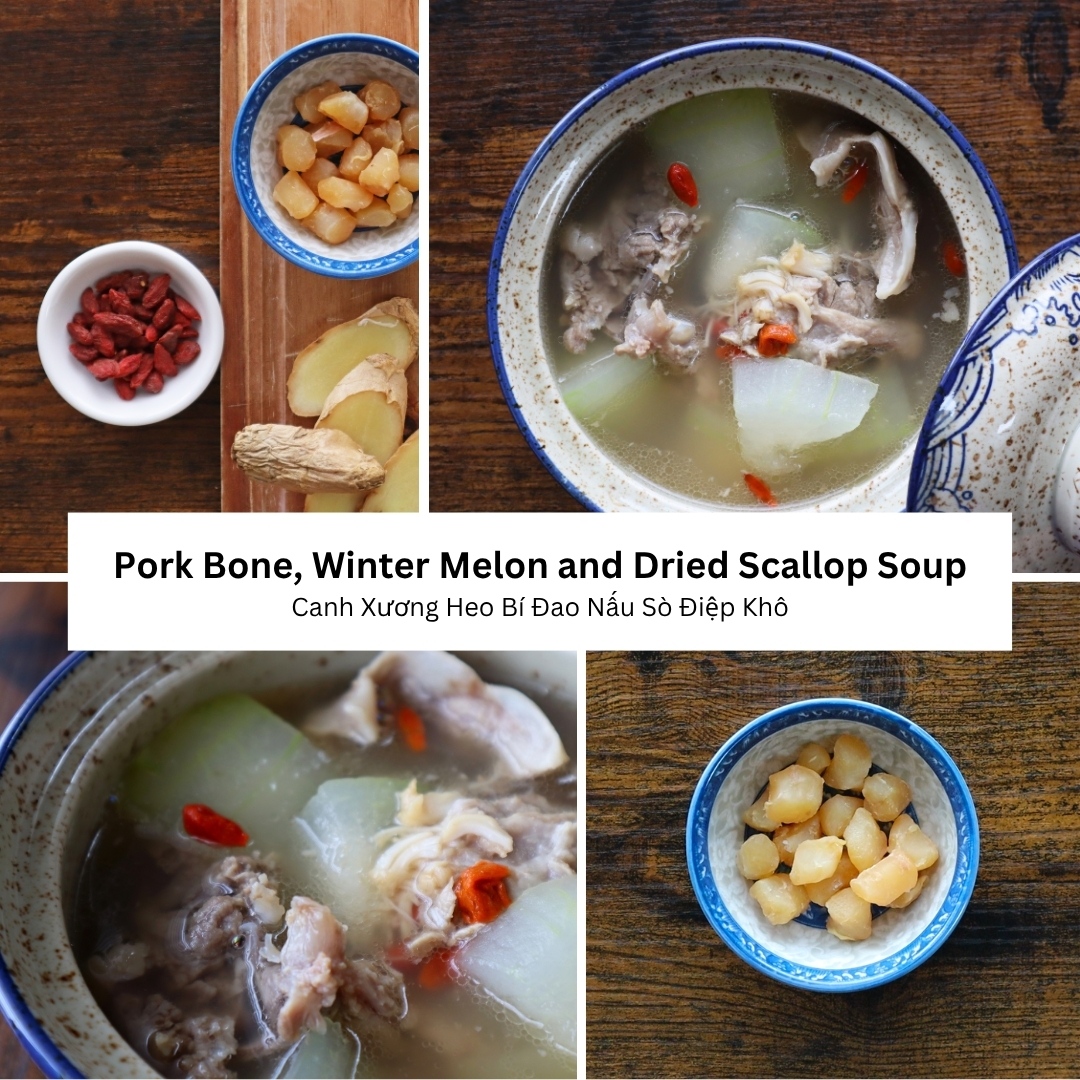
In Cantonese culinary tradition, slow-cooked clear soups, known affectionately as lou fo tong, are considered the very heart of homestyle cooking. These broths are lovingly prepared not only to nourish the body, but also to bring balance. Winter melon (dōng guā) is celebrated for its natural cooling qualities, making this delicate soup wonderfully soothing after a busy week. Paired with dried scallops (conpoy), a prized delicacy renowned for its rich umami depth, the broth takes on an elegant, naturally sweet character without needing heavy seasonings.
Whether you are enjoying a casual weeknight dinner or gathering with loved ones over the weekend, a bowl of this clear soup provides an inviting, calming start to the meal. The winter melon becomes pleasantly tender, absorbing all the precious flavours of the pork neck bones and seafood. Topped with a sprinkle of bright goji berries and a pinch of white pepper, this soothing soup is simple to make and sure to bring comfort to everyone around your table.
Q&As on Pork Bone, Winter Melon and Dried Scallop Soup
1. What is winter melon?
Winter melon, also known as wax gourd, is a large Asian vegetable with pale, mild-tasting flesh and a gentle flavour. Despite its name, winter melon actually grows during the warmer summer months. It earned its winter name because of the thick, waxy coating on its skin, which naturally preserves the melon so families could store and enjoy it well into the cold winter season. Its snowy, frosty appearance when sliced also brings winter to mind!
In cooking, winter melon acts like a wonderful natural sponge. It easily absorbs all the savoury, rich notes of our slow-simmered pork broth while turning tender and translucent without falling apart. You will often see it featured in traditional Chinese home-cooked soups, stews, and braises. When prepping it for your soup pot, simply slice away the tough outer rind and scoop out the seedy core, leaving you with clean, succulent chunks ready for simmering.
2. What is conpoy?
Conpoy is the Cantonese name for dried scallops. It’s made by drying scallop meat, which concentrates its naturally sweet, savoury flavour and gives it a rich umami taste. Because it’s prized and can be expensive, a small amount often goes a long way.
Before using conpoy, rinse it and soak it in warm water until softened. You can gently shred it to help its flavour spread through the dish, and add the soaking liquid to your soup for extra depth. Conpoy is often used in soups and congee, but it also adds lovely savoury flavour to rice dishes and sauces.
3. What are goji berries, and where are they grown?
Goji berries, also known as wolfberries, are small red-orange fruits often sold dried. They have a mild, sweet-tart flavour and are used in Chinese soups, teas, congee and desserts.
They grow on hardy shrubs native to Asia. China is the best-known producer, particularly the northern and northwestern regions, including Ningxia. Goji berries are also grown in other parts of the world, including Europe and North America. If you’re curious about the origin of the berries you buy, check the package label.
In this soup, goji berries are optional. Add a small handful near the end of cooking so they soften and add a cheerful pop of colour.
4. Can I leave the dried scallops whole, or should I shred them?
Both approaches work well, and the choice comes down to personal preference and the size of your scallops. If you are using smaller dried scallops, leaving them whole is completely fine. They will soften as they simmer and release plenty of flavour into the broth. When you have larger scallops, or want their savoury taste shared through every bowl, gently tease them apart into fine shreds after soaking.
Shredding helps the scallops distribute their rich umami notes evenly. The strands also become wonderfully soft and easy to enjoy with each spoonful. Remember to pour the soaking liquid straight into the soup pot, because it holds so much natural flavour.
5. How can I keep the soup broth crystal clear?
Achieving a clean, clear broth comes down to careful preparation of the pork bones. First, soak the pork neck bones in cold water for thirty minutes to help draw out excess blood. Next, place them in a pot of fresh cold water, bring it to a boil, and blanch the bones for five minutes. Drain the bones thoroughly, rinse away any clingy foam under running cold water, and wash out the pot before starting the soup. When you return the clean bones to fresh water, bring the pot up to a boil, then immediately turn the heat down to low. Keeping the broth at a gentle simmer rather than a rapid boil prevents the fat from clouding the soup. A quick skim of the surface during the early stage of cooking will keep your finished broth sparkling and beautiful.

Explore More Comforting Asian Soups
If you loved the gentle warmth and soothing flavours of this slow-simmered broth, there are so many more delicious bowls waiting for you to discover. Asian home-style soups are wonderful for bringing balance, comfort, and nourishment to the family table, whether you crave light herbal broths, hearty vegetable soups, or rich simmered broths.
Take a look around our collection to find your next favourite cosy recipe. You’ll find simple step-by-step guides that make simmering classic broths easy, approachable, and always rewarding. Grab your soup ladle, explore our other recipes, and let’s keep filling your home with wonderful aromas!
- Chinese Pork Bone and Corn Soup
- Korean Pork Bone Soup (Gamjatang)
- Stuffed Bitter Melon Soup (Canh Khổ Qua Dồn Thịt)
Recipe for Pork Bone, Winter Melon and Dried Scallop Soup
Equipment
- 1 large soup pot
Ingredients
- 850 grams pork neck bones
- 850 grams winter melon
- 30 grams dried scallops
- 4 slices fresh ginger
- 1 tablespoon goji berries optional
Seasoning (to taste):
- Salt, mushroom powder, white pepper
Instructions
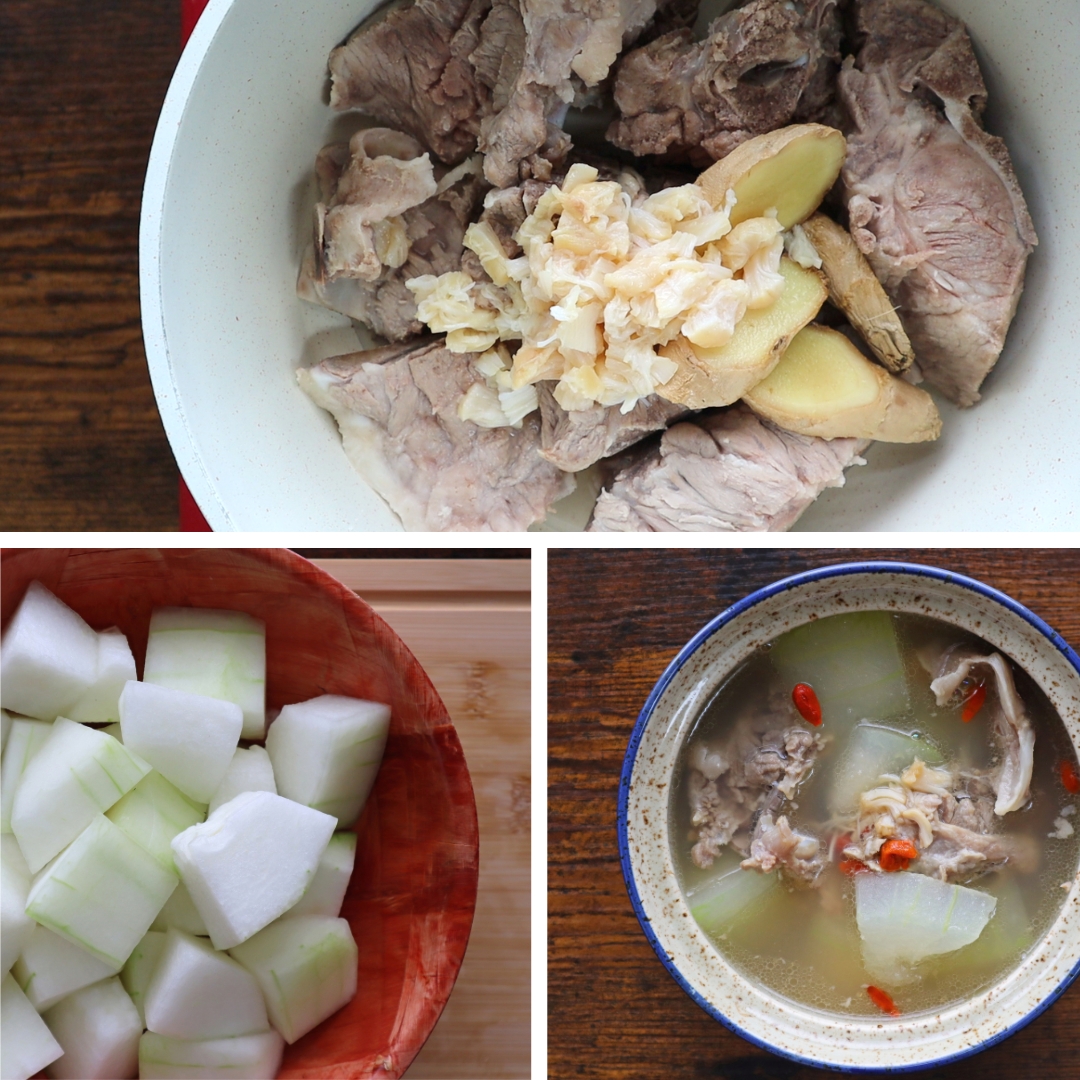
- Prepare the Ingredients:Rinse the dried scallops, then place them in a small bowl. Cover with warm water and soak for 30-45 minutes, until softened. Keep the soaking liquid. Gently tease the softened scallops apart into light shreds. This helps them release their rich, savoury flavour right into the broth as it simmers.Place the pork neck bones in a large bowl and cover with cold water. Soak for 30 minutes, then drain and rinse. Add the bones to a pot and cover with cold water. Bring to a boil and cook for 5 minutes. Drain, rinse the bones well, and wash out the pot. This helps remove foam and impurities from the broth.Remove the melon’s skin and seeds, then cut the flesh into bite-sized pieces.
- Cook:Return the bones to the clean pot. Add 9 cups of fresh water, ginger, the soaked scallops and their soaking liquid. Bring to a boil, then reduce the heat to low.Simmer gently. Cover partially and simmer for about 2 hours, skimming the surface as needed.Stir the winter melon into the pot. Simmer for another 25-35 minutes, until the melon is tender but still holds its shape. Rinse the goji berries (if using), then add them during the last 5-10 minutes of simmering so they soften without losing too much colour.Season to taste, then turn off the heat.
- Serve:Serve hot, with a little white pepper, if desired.