

Japchae (Sweet & Savoury Korean Glass Noodles with Beef)
Japchae is one of Korea’s most recognisable celebration dishes: glossy sweet potato glass noodles (dangmyeon) tossed with savoury beef, colourful vegetables, and a lightly sweet, sesame-scented sauce. It suits birthdays, holidays, and special gatherings. The dish looks festive, serves groups well, and tastes delicious warm or at room temperature.
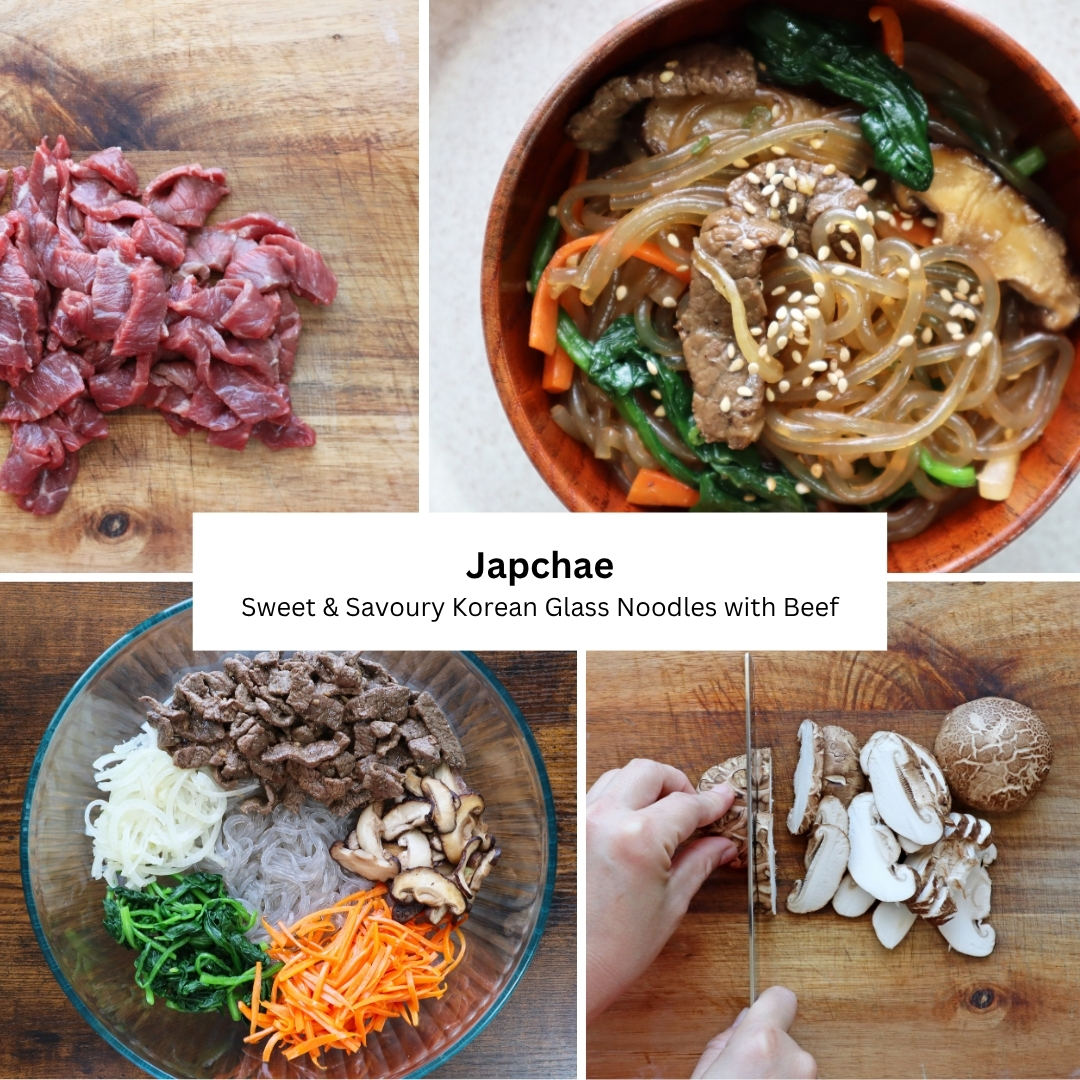
Japchae’s story is part of why it’s so beloved:
- Royal court roots (early Joseon period): Japchae is widely associated with Korea’s royal court cuisine. One common origin story dates Japchae to the early 1600s, during King Gwanghaegun’s reign. The name means “mixed vegetables.”
- Originally not a noodle dish: Early versions of japchae were primarily stir-fried mixed vegetables, often served as a refined banquet dish. The glass noodles most people think of today became standard later.
- Noodles added later (modern japchae): Over time – especially as sweet potato starch noodles became more widely available – dangmyeon was incorporated and eventually became the “main character.” Today’s japchae is essentially a noodle-and-veg stir-fry that keeps the elegant, celebratory spirit of the original.
- Why it’s a celebration classic: The dish is visually vibrant and symbolically “abundant,” making it a natural fit for feasts and family-style meals.
This is why the technique matters: cooking ingredients separately preserves colour and texture, giving you that classic banquet-style look.
Q&As on Japchae
1. What makes Korean sweet potato glass noodles (Dangmyeon) different from other types of glass noodles?
Most Asian glass noodles use mung bean or pea starch, whereas Korean Dangmyeon uses pure sweet potato starch. These thicker noodles offer a signature bouncy chew, and they also hold up wonderfully under heat without becoming mushy. Unlike thinner mung bean threads that absorb liquid almost instantly, sweet potato noodles require a longer boiling time and have a wonderful ability to soak up heavy sauces while remaining glossy and translucent. Their structural integrity makes them the perfect “main character” for stir-fries like Japchae, where they hold up even when you toss them vigorously with meats and vegetables without breaking.
2. Why is it necessary to stir-fry the vegetables and beef separately instead of cooking them all at once?
Stir-frying each component separately is the secret to achieving a professional, restaurant-quality Japchae and is a hallmark of traditional Korean technique. Every ingredient in this dish has a vastly different optimal cooking time and moisture content. By cooking them individually, you ensure that the carrots remain crisp-tender, the onions become translucent without burning, and the beef stays juicy rather than steaming in vegetable juices. This method keeps the colours distinct, creating a vibrant presentation where each flavour and texture shines.
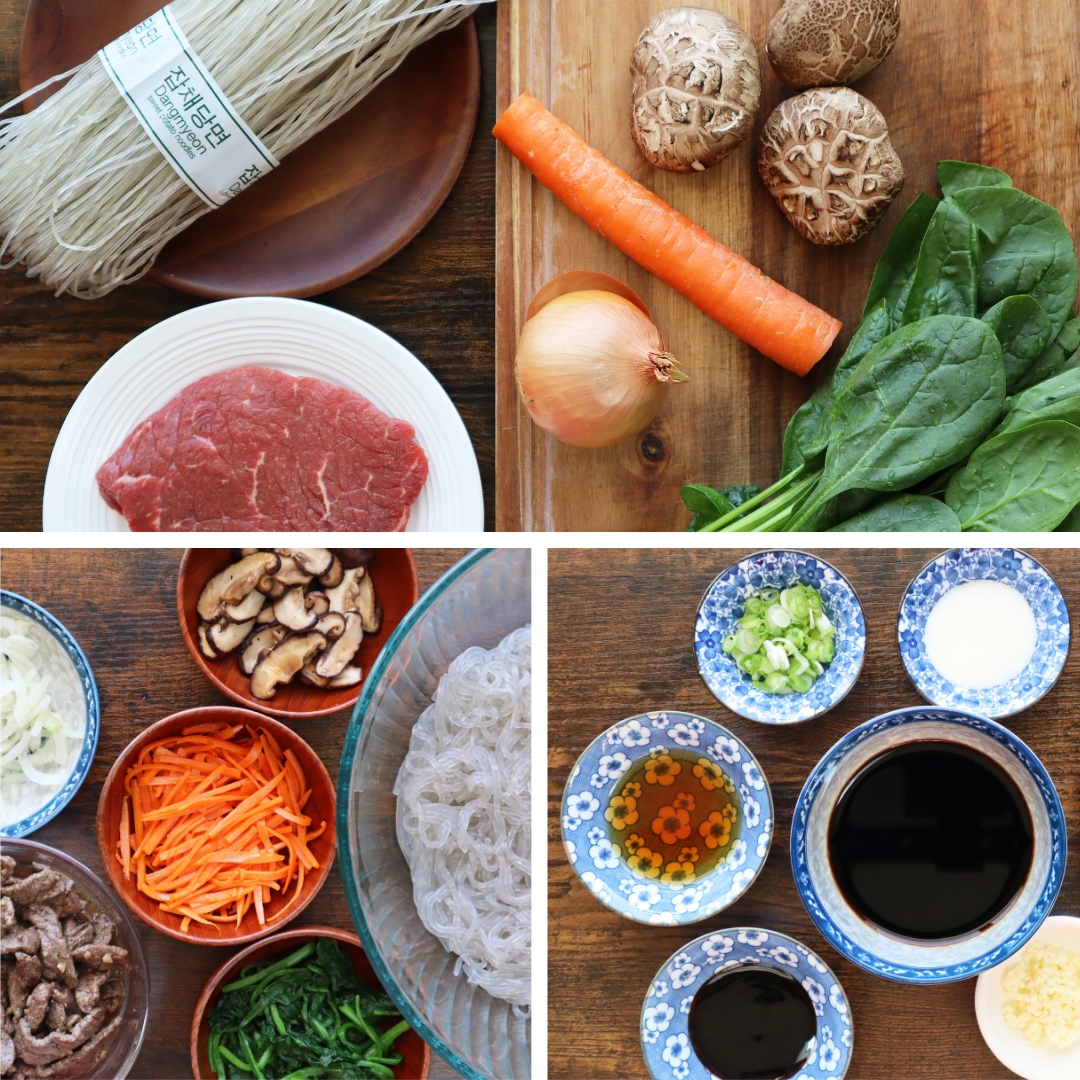
3. Can Japchae be made in advance, and what is the best way to store it?
Yes, Japchae stores well, making it ideal for meal prep and large gatherings. Because the sweet potato starch noodles are naturally resilient, they don’t bloat or turn into a sodden mass as quickly as wheat-based noodles do when stored.
You can keep the assembled dish in an airtight container in the refrigerator for up to three to four days with minimal loss in quality. However, cold storage can make the noodles firmer and less translucent due to starch retrogradation. Reheat them properly to restore their signature chewy, glossy texture before serving.
4. What is the most effective way to reheat leftover Japchae without the noodles becoming dry or brittle?
To reheat leftover Japchae, briefly “re-fry” it in a pan over low to medium heat. Avoid using a microwave, which can result in uneven heating and rubbery noodles.
Add a tiny splash of water or a teaspoon of oil to the pan first; this creates a small amount of steam that helps hydrate the starch and softens the noodles back to their original elasticity. As you toss the noodles gently, the sesame oil in the original sauce will melt and re-coat the ingredients, restoring the dish’s beautiful shine and fragrant aroma. If the noodles still seem a bit stiff after heating, a very small drizzle of fresh sesame oil or a tiny bit of soy sauce can help revitalize the flavours and the slippery texture.
5. What other proteins can I use as a substitute for beef when making Japchae?
While beef is the traditional choice, Japchae is incredibly versatile. You can adapt it to suit almost any protein preference or dietary requirement.
Pork loin or shoulder, sliced into thin matchsticks, is a popular alternative in Korea. It provides similar savoury depth and stands up well to the soy-based marinade. You can also use chicken breast or thigh strips, but be careful not to overcook them, so they remain juicy. If you prefer seafood, shrimp or even julienned squid work beautifully, adding a subtle briny sweetness that complements the earthy shiitake mushrooms.
For a vegetarian or vegan Japchae, use firm tofu or a wider variety of mushrooms. These ingredients create a satisfyingly “meaty” texture without animal protein.
Explore More Korean Recipes from Viet Flavours
We hope you enjoyed making this authentic Japchae! If you’re ready to dive deeper into the world of Korean cuisine, check out our other easy-to-follow recipes. There’s a whole world of savoury, sweet, and spicy dishes waiting for you to try.
- Korean Pork Bone Soup (Gamjatang)
- Korean Ground Beef & Rice Cake Soup (Tteokguk)
- Osam Bulgogi (Spicy Squid and Pork Stir-Fry)
Recipe for Japchae (Sweet & Savoury Korean Glass Noodles with Beef)
Equipment
- 1 small non-stick pot
- 1 large pot
Ingredients
Main Ingredients:
- 225 grams Korean glass noodles
- 200 grams beef
- 100 grams fresh spinach
- 3 fresh flower shiitake mushrooms
- 1 medium carrot
- ½ yellow onion
Finishing Touch & Garnish:
- 2 green onions (finely chopped)
- 2 egg yolks (lightly beaten)
- 1 tablespoon roasted sesame seeds
Noodle Sauce:
- 3 tablespoons soy sauce
- 1 tablespoon sugar
- 1 tablespoon oyster sauce
- 1 tablespoon + 2 teaspoons sesame oil
- 1 tablespoon chopped green onion
- ½ tablespoon freshly minced garlic
Beef Marinade:
- 1 tablespoon soy sauce
- 1 teaspoon sesame oil
- ½ teaspoon sugar
- ½ tablespoon freshly minced garlic
- ½ teaspoon black pepper
Instructions
- Prepare the Vegetables:Remove the stems from the flower shiitake mushrooms, then thinly and evenly slice the caps.Thinly slice the yellow onion.Julienne the carrot.Chop the spinach into lengths of about 5-6 cm.
- Prepare the Beef and Noodle Sauce:Thinly slice the beef.In a bowl, combine the sliced beef with 1 tablespoon of soy sauce, 1 teaspoon of sesame oil, ½ teaspoon of sugar, ½ tablespoon of freshly minced garlic, and ½ teaspoon of black pepper. Mix well and let it rest while you prepare the other components.In a separate bowl, combine 3 tablespoons of soy sauce, 1 tablespoon of sugar, 1 tablespoon of oyster sauce, 1 tablespoon plus 2 teaspoons of sesame oil, 1 tablespoon of chopped green onion, and ½ tablespoon of freshly minced garlic. Stir well until the sugar is dissolved, then set aside.
- Cook:Blanch the spinach in boiling water for 30-40 seconds. Immediately plunge into ice-cold water, then drain and squeeze out as much moisture as possible.Using a small amount of neutral oil for each, stir-fry separately:- The yellow onions until translucent.-The julienned carrots until just tender (about 2 minutes).- The sliced shiitake mushrooms until softened.- The marinated beef over high heat until just cooked through.Heat a non-stick pan over low-medium heat with a drop of oil. Pour in the beaten egg yolks to form a very thin sheet. Once set, fold and remove from the pan. Let it cool, then slice into thin ribbons.Boil the glass noodles for 6-7 minutes (or according to package instructions) until translucent and chewy. Drain, rinse briefly with cold water, and cut into shorter lengths using kitchen shears.
- Assemble:In a large mixing bowl, combine the noodles, blanched spinach, stir-fried vegetables, and beef. Pour in the prepared noodle sauce, and add extra chopped green onions if desired. Toss thoroughly until everything is evenly coated.
- Serve:Transfer to a serving dish and garnish with sesame seeds and egg ribbons. Enjoy your Japchae!