

Pork Bone and Daikon Radish Soup
Warm, clear, and deeply comforting, this Pork Bone and Daikon Radish Soup is a simple home-style recipe made with tender pork neck bones, naturally sweet daikon radish, fragrant ginger, and shallots. Slowly simmered until the pork is fall-apart tender, the broth becomes rich in flavour while remaining light and clean.
The secret to a beautifully clear pork bone soup is taking the time to soak, blanch, and rinse the bones before simmering. This extra step removes excess blood and impurities, creating a cleaner broth with a delicate, comforting taste.
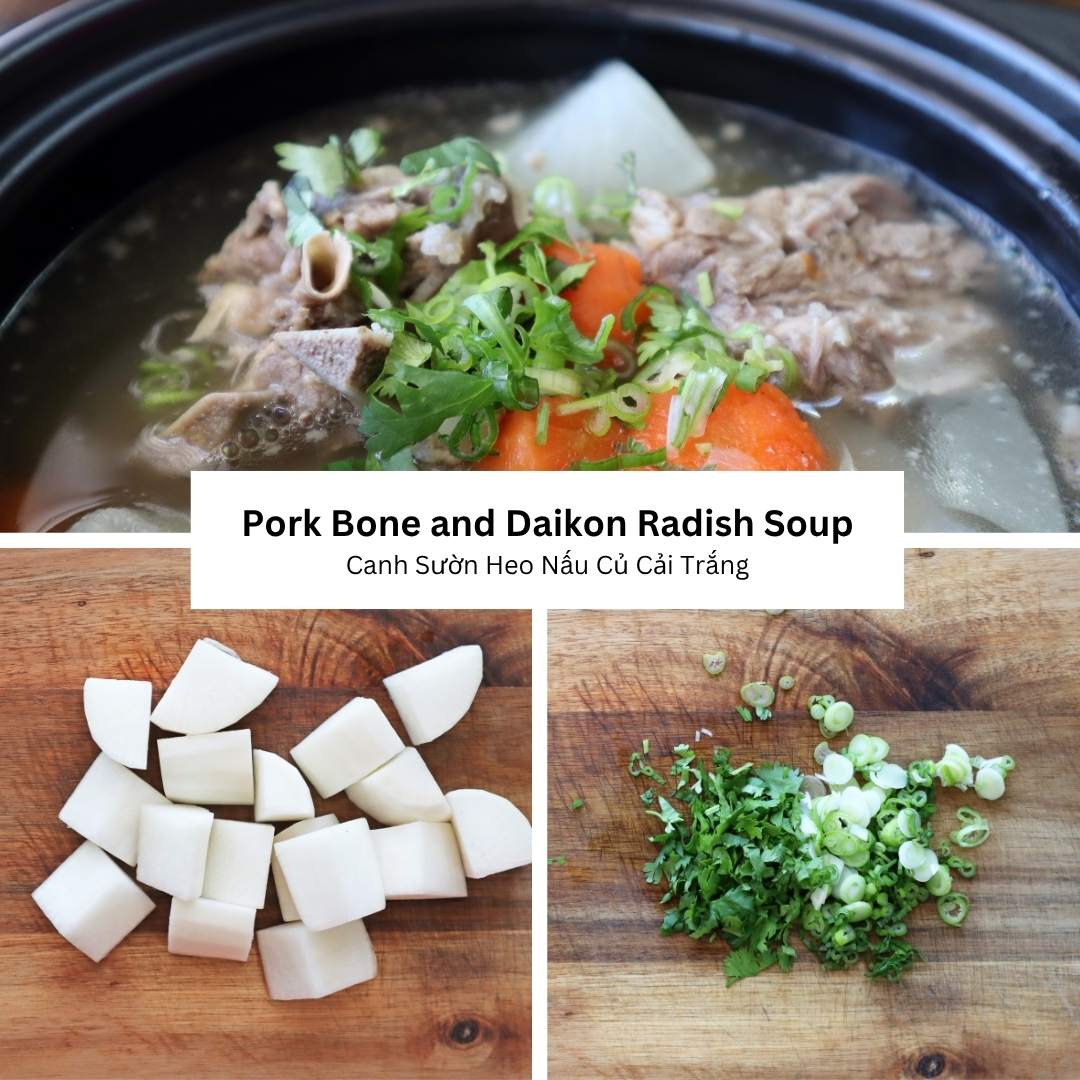
Daikon radish is added near the end of cooking so that it becomes tender and slightly translucent without losing its shape. As it simmers, it releases a gentle natural sweetness that balances the savoury pork broth. Carrots are optional, but they add a lovely touch of colour to the finished soup.
This Vietnamese-style pork bone and daikon radish soup is wonderfully satisfying on a cold day and easy enough to prepare for a family meal. Serve it hot with steamed rice, a small dish of fish sauce with sliced chili, or simply enjoy it on its own with fresh green onions and cilantro.
Why You’ll Love This Pork Bone and Daikon Radish Soup
- Clear, flavourful broth made by slowly simmering pork bones with ginger and shallots
- Simple, wholesome ingredients with no complicated seasoning
- Naturally sweet daikon radish that perfectly complements the savoury pork
- Comforting and nourishing for cool-weather meals or whenever you crave a warm bowl of soup
- Easy to customize with carrots, cilantro, extra white pepper, or your favourite garnishes
Whether you call it pork bone soup, daikon radish soup, or a comforting Vietnamese-style clear broth, this recipe is a delicious reminder that the most satisfying meals often come from the simplest ingredients.
Q&As on Pork Bone and Daikon Radish Soup
1. What type of pork bones are best for making a clear and flavourful soup?
For a truly rich and authentic broth, you want to choose bones that have a good balance of marrow and small amounts of meat. While many people use spare ribs or back bones, I personally prefer using pork neck bones for this recipe. Neck bones are excellent because they contain a high amount of collagen and marrow, which adds a wonderful depth and “body” to the soup without making it overly greasy. Additionally, the meat found around the neck is incredibly sweet and becomes spectacularly tender after simmering for a couple of hours, often falling right off the bone. If you cannot find neck bones, pork shank or riblets are also great alternatives that provide plenty of flavour for the broth.
2. Why should I soak and blanch the pork bones before making the soup?
Soaking the pork bones in cold water helps draw out residual blood and other impurities. Blanching them then loosens and removes foam, blood proteins, and particles from the surface of the bones. Rinsing the bones thoroughly afterwards helps prevent these impurities from making the broth cloudy or affecting its flavour. This extra preparation also helps reduce unwanted pork odours, resulting in a cleaner, clearer, and more delicate soup. Although it takes a little extra time, it makes a noticeable difference in the finished broth.
3. Is this soup originally from China? I see many recipes calling it “Chinese Pork Bone and Daikon Soup.”
While the combination of pork bones and daikon radish is a staple in Chinese and Taiwanese households – often called bái luóbo páigǔ tāng – this soup is also a very common and beloved dish in Vietnamese family cooking. Because the ingredients are so simple and local to many parts of Asia, this style of clear, nourishing soup has naturally become a part of various East and Southeast Asian culinary traditions over the centuries. In Vietnam, we value this soup for its “thanh” (clear and light) quality, focusing on a crystal-clear broth and the natural sweetness of the radish. So, while you will certainly find Chinese versions, the recipe we share here is prepared with the specific techniques and flavour balance common in a Vietnamese home kitchen. Regardless of its exact roots, it remains a universal symbol of comfort across many Asian cultures.
4. Since the recipe is quite simple, should I add more vegetables or other ingredients to the soup?
While it might be tempting to add more variety, the true beauty of this Pork Bone and Daikon Radish Soup lies in its simplicity and elegance. In Vietnamese home cooking, we often appreciate “thanh” flavours – which means clear, bright, and pure. Adding too many extra ingredients can easily distract from the delicate balance between the savoury pork broth and the natural, subtle sweetness of the daikon. By keeping the ingredient list minimal, you allow the quality of the broth and the texture of the tender pork to really shine. If you do want a little variety, the small addition of carrots is perfect for colour, but we recommend sticking to the core recipe to experience the soup’s intended clean and soothing character.
5. What exactly is a daikon radish, and what does it taste like?
Daikon is a large, winter radish characterized by its long, white, cylindrical shape – it often looks like a giant white carrot. In terms of flavour, it is much milder and less peppery than the small red radishes you might find in a typical grocery store salad. When raw, it is crisp and slightly zesty, but when simmered in a soup like this, it undergoes a beautiful transformation. It becomes tender and somewhat translucent, absorbing the savoury notes of the pork broth while releasing its own delicate, characteristic sweetness. It is a nutritional powerhouse as well, known in many Asian cultures for aiding digestion and being low in calories while high in vitamin C. If you are shopping for one, look for a daikon that feels heavy for its size with smooth, firm skin to ensure it is fresh and juicy inside.
Explore More Comforting Soup Recipes
If you enjoyed this Pork Bone and Daikon Radish Soup, explore more comforting soup recipes from Viet Flavours. From clear, nourishing broths to hearty family favourites, these recipes are made with simple ingredients and traditional home-style techniques.
- Stuffed Bitter Melon Soup (Canh Khổ Qua Dồn Thịt)
- Korean Ground Beef & Rice Cake Soup (Tteokguk)
- Vietnamese Macaroni Soup with Pork Ribs (Súp Nui Sườn)
Pork Bone and Daikon Radish Soup
Equipment
- 1 large pot
Ingredients
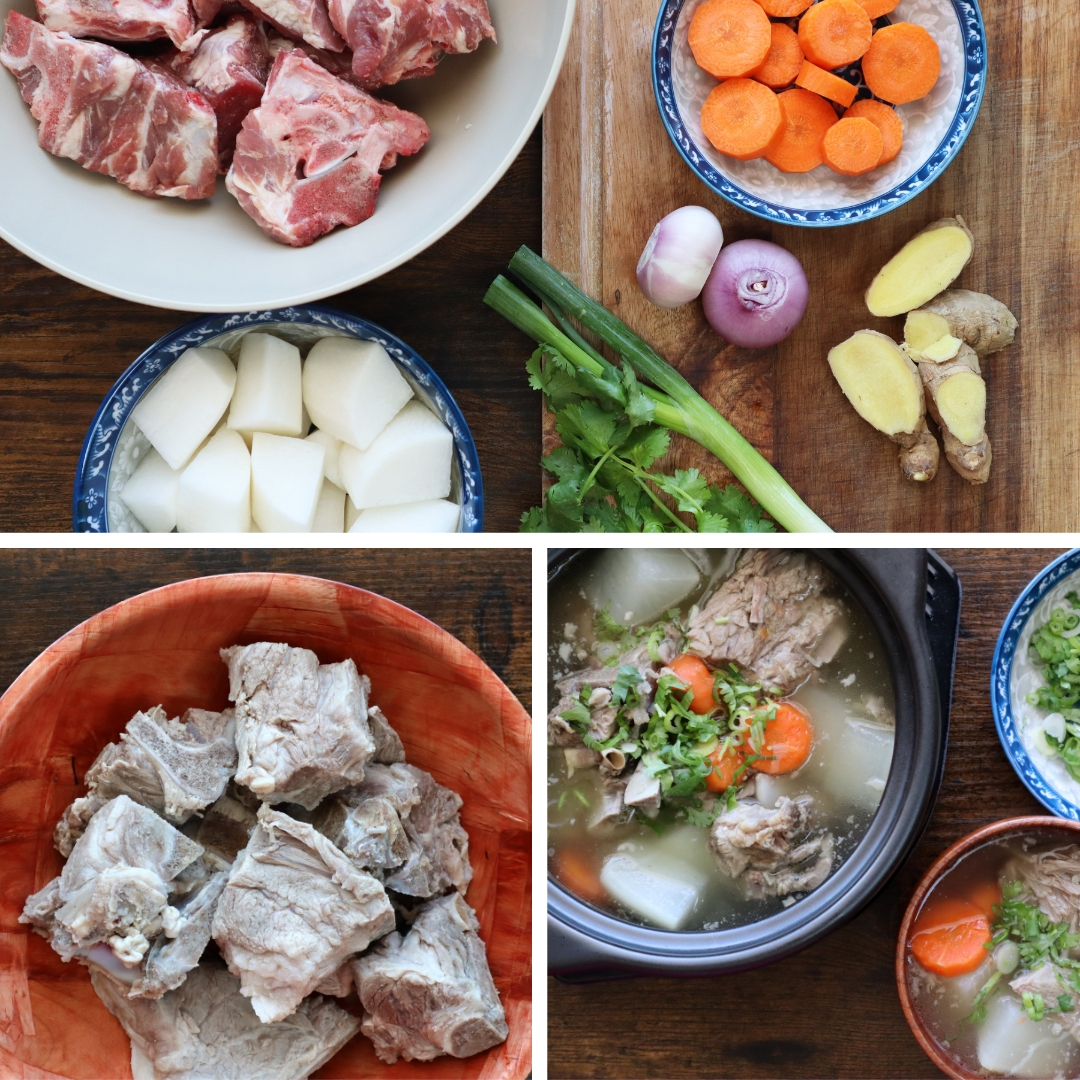
- 900 grams pork neck bones
- 350 grams daikon radish
- 1 medium carrot optional
- 4 thick slices ginger
- 2-3 whole shallots
Garnish:
- Green onion, cilantro
Seasoning:
- Salt, white pepper, rock sugar (to taste)
Instructions
- Prepare the Pork Bones:Place the pork neck bones in a large bowl and cover them with cold water. Soak for about 30 minutes to help draw out residual blood and impurities. Drain well.Transfer the bones to a medium soup pot and cover them with fresh water. Bring to a boil and blanch for about 10 minutes. Foam and impurities will rise to the surface.Remove the bones from the pot and rinse them thoroughly under running water, gently scrubbing away any residue.Discard the blanching water and clean the pot before continuing.
- Simmer the Broth:Return the cleaned pork bones to the pot. Add the ginger slices and peeled shallots.Pour in enough fresh water to generously cover the bones, allowing for some evaporation during the long simmer. Add 1 teaspoon of salt.Bring the pot to a boil over medium-high heat. Skim off any foam or impurities that rise to the surface.Reduce the heat to low and simmer gently, partially covered, for about 1½ hours, or until the pork is very tender and some of the meat begins to pull away from the bones.
- Prepare the Vegetables and Garnish:While the broth simmers, peel and cut the daikon radish into thick chunks or wedges.If using, peel and cut the carrot into bite-sized pieces. The carrot is optional and is mainly added for colour.Finely chop the green onions and cilantro. Set them aside for garnishing.
- Add the Vegetables and Season:Once the pork is tender, add the daikon radish and carrot to the pot.Continue simmering for 25-30 minutes, or until the vegetables are tender but still hold their shape.Taste the broth and adjust the seasoning with additional salt, rock sugar, and white pepper as desired.Turn off the heat and let the soup rest for 10-15 minutes. This allows the flavours to settle.
- Serve:Ladle the hot soup into serving bowls, including tender pork, daikon, and carrot.Garnish with chopped green onions and cilantro. Serve hot and enjoy.